

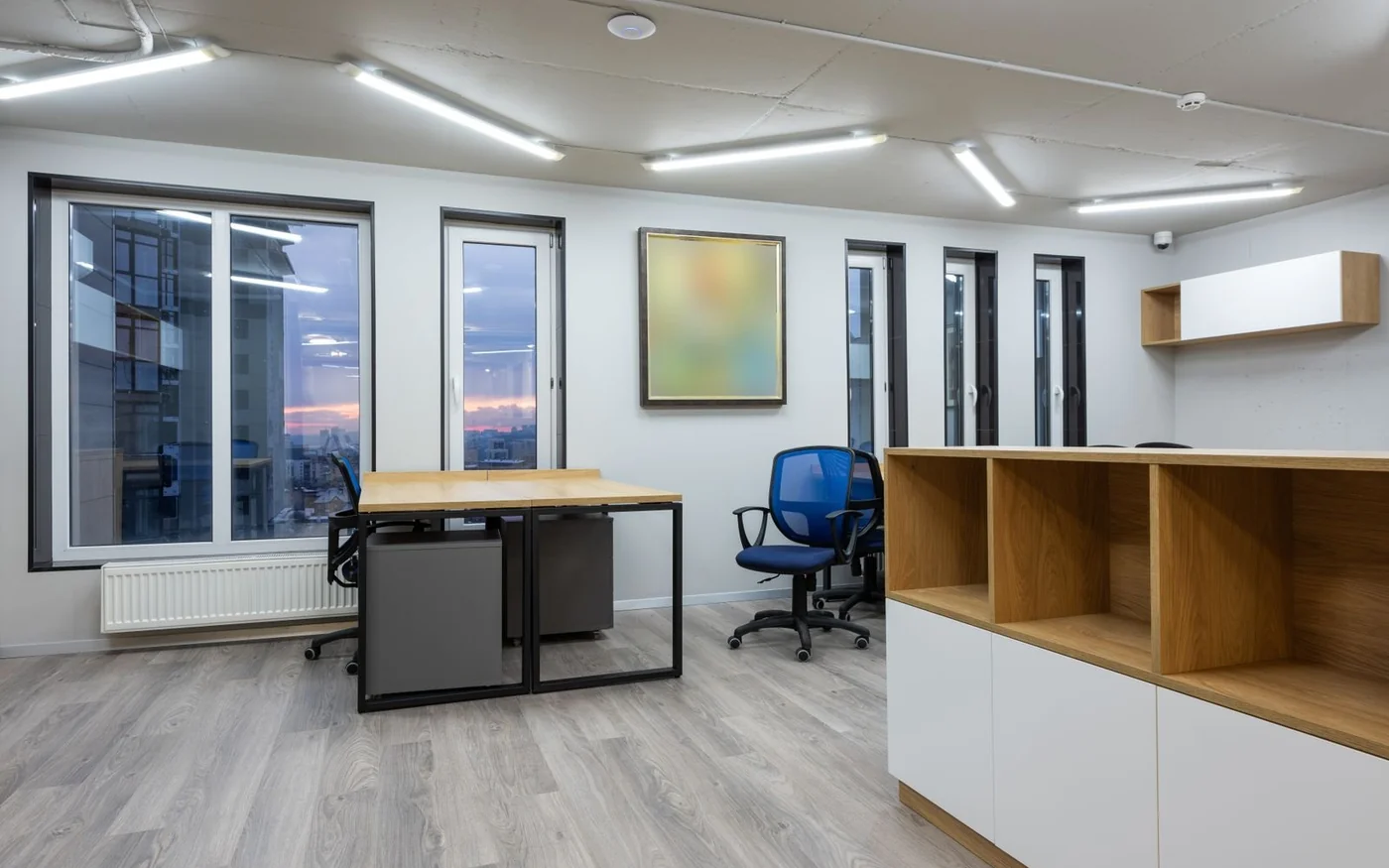
Analysis | Visa’s Dubai office brings together regional management and a place for payments prototyping. Its example shows where to look for economic value beyond the opening announcement, from the people who can make decisions to the UAE partners that can use what the office helps build.
When Visa opened its new regional headquarters in Dubai in November 2021, the announcement said the office would house nearly 500 regional employees and had room for up to 750. It also described a dedicated innovation centre with spaces for prototyping payment experiences. These details make two distinct claims about the office. One concerns the scale of the workplace at opening. The other concerns what employees and partners were expected to do there. The figures describe the 2021 announcement. They cannot establish today’s headcount or how many jobs were added to the UAE economy. Dubai Government Media Office on the Visa opening
A headquarters becomes economically important when the activity based there changes what people and companies in the UAE can do. Some of that contribution is direct, such as sustained employment and procurement. Some comes through customers and suppliers that learn to deliver new work. Each requires different evidence. The office address helps locate the inquiry, while the work done there determines the answer.
Find the people who can make decisions
A regional headquarters can carry several mandates. One team may manage local customers and another may allocate investment, oversee risk or own a product roadmap. They might share a building while reporting through different chains. A nameplate and a lease tell a supplier little about which team owns its opportunity.
Visa itself drew a distinction in January 2026 when it announced a dedicated leadership structure covering the UAE and identified the country as home to its broader regional headquarters and innovation centre. In September it separately announced the appointment of a UAE country manager. These releases identify layers of responsibility. They do not give an authority matrix or say where every product or budget decision takes place. A vendor approaching Visa in Dubai still needs to establish who sponsors the work, who controls the budget and who accepts the result. Visa’s January 2026 leadership announcement · Visa’s September 2026 UAE country manager announcement
Consider an illustrative Dubai software vendor that is invited to demonstrate a tool for detecting payment errors. A local relationship manager can open the conversation. A regional product owner may decide whether the tool belongs on the roadmap. A security team may need to review what data it handles. If the relevant sponsor and reviewers are available to the vendor through the Dubai office, the office can make the work easier to coordinate. If the local meeting is chiefly a route to a decision elsewhere, the company should budget for the additional steps. Either arrangement can result in a contract. The difference affects how the vendor should plan the sale and what activity can be attributed to the UAE office.
One practical sign of a substantive mandate is a decision that can be traced. Look for a team that owns a specification, chooses how to run a pilot or is accountable for whether a service reaches customers. It may share those duties with other offices. Shared responsibility can still put useful work in Dubai if the local team controls a defined part and has the skills and resources to carry it out.
The innovation centre gives partners a place to test ideas
Visa’s description of its innovation centres lists design sprints, workshops and validation of user experiences among the services available, and identifies a Dubai centre where partners can collaborate. A workshop may bring together people who would otherwise evaluate a problem separately. A bank can explain how it handles customer authentication, a merchant can show where a checkout fails and a designer can test whether a proposed flow makes sense. Those are plausible uses of the service. The listing does not disclose which workshops occurred or which designs advanced. Visa’s innovation centre directory and services
In May 2026, Visa announced its Agentic Ready programme in the UAE. The initial phase was designed to let issuers test transactions initiated by AI agents in a controlled environment. Visa named participants including ADCB, Emirates NBD, Mashreq, Tabby, Wio and Ziina. That is a more concrete signal than an office opening because it identifies a test activity and organisations that joined. Visa’s announcement does not locate each test at the Dubai headquarters, and joining a programme leaves open whether a participant has deployed anything to customers. Visa’s May 2026 UAE programme release
A separate product shows what a later stage of evidence looks like. ADCB’s April 2026 Instagram reel announces its Instant Tourist Account for UAE visitors. The bank has a product page describing the digital account and its debit card, alongside the conditions that apply. The example is separate from Agentic Ready. Its value here is the difference between joining a test and offering a named service to a defined customer group. A launch still leaves questions about how often the service is used and what it changes for customers. ADCB’s Instant Tourist Account product page
The wider economic benefit comes into view when a UAE partner can repeat work it previously struggled to do. A bank might establish a new way to test who authorised a transaction, or a local software firm might gain experience integrating with a payment network. The useful evidence would be a reusable test process, an accepted integration or a product that goes into operation. Attendance counts can show the reach of a programme. The later evidence tells us what participants gained.
Separate jobs in the building from jobs added to the economy
The opening announcement’s nearly 500 employees and space for up to 750 describe different things. One was the workforce the office was expected to house. The other was capacity. An existing Dubai team can move into a larger office with little immediate change in UAE employment, while a new function can add jobs even if the company keeps the same floor area. To judge the employment effect, compare actual UAE-based roles before and after the change and separate hires from staff transferred within the UAE.
The type of work matters alongside the count. A small product team that owns a recurring service can create demand for specialist engineers, testers and local training. A larger office can create steady demand for building services and business support. The two are different channels of contribution. For a public assessment, ask which roles persisted, whether their scope expanded and which kinds of work now recur in the UAE.
Use a similarly careful boundary for procurement. A construction or fit-out contract creates work during a finite period. A continuing contract for security monitoring, technical support or research sustains a different relationship. The location of the vendor’s invoice is one clue. To establish the work retained in the UAE, check where the service is performed and whether the contract supports local staff, subcontractors or equipment. If a supplier bills from Dubai for a service largely delivered elsewhere, the full contract value would overstate the local activity.
Sales booked through a Dubai entity need a similar check. An office can support customers from the UAE even when invoices are issued by another group company. Conversely, group sales appearing in an entity’s accounts do not identify the work its local employees performed. An economic assessment needs to distinguish reported sales from the labour and services supplied in the UAE. Where only a company-wide figure is available, a narrower description of the named Dubai functions is more defensible than an estimate of the office’s contribution.
Look for value that remains after the first announcement
A sensible evaluation starts with a baseline. Identify the functions the business already had in the UAE before it opened the headquarters, then check which functions actually moved or expanded. Look for comparable measures at a later date, such as active local teams, recurring UAE procurement and named services supported from the office. Where results involve several sites, give the Dubai team credit for the work it can be shown to have performed.
There is also a difference between value delivered to the company and capability that stays in the UAE. A better internal approval process may save the company time. A repeated collaboration with local partners can leave those partners with new methods, supplier relationships or trained people who carry the work into another project. To argue that this happened, look for a second engagement or a follow-on delivery that draws on the same capability. A single branded workshop provides a starting point for that inquiry.
For a founder, the immediate test is whether the Dubai team can sponsor a trial with defined inputs, a decision date and a route to a contract. For an analyst, the test is whether local work persists and creates additional income or capability that can be observed. Visa’s public records support a Dubai headquarters, a defined innovation function and participation in a UAE testing programme. The next level of evidence would trace those functions into sustained hiring, repeated supplier work or operating services. That is where the economic contribution of a headquarters becomes easier to measure.



Comments (0)
No comments yet. Be the first!