

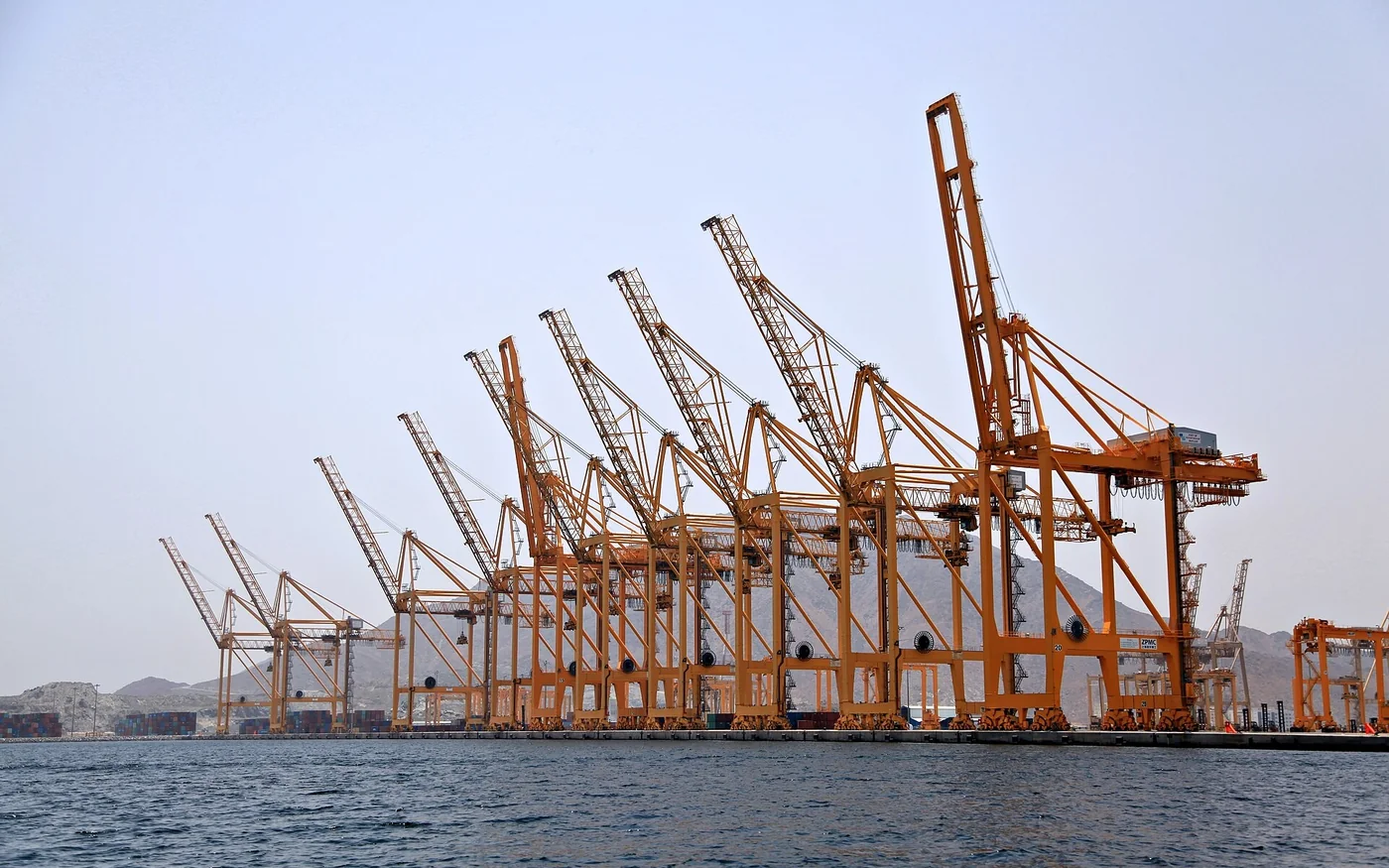
A quote to Fujairah and a quote to Khorfakkan may look like competing prices for the same UAE delivery. They may actually end at different points, depend on different inland arrangements, or leave the importer responsible for charges that are included in the alternative. The port name and ocean rate are therefore only the beginning of the comparison.
Start with two proposals that have been checked for the actual cargo, equipment and intended shipment date. Establish where each movement ends, what must happen before the goods can be collected, who arranges transport to the UAE receiver, and who pays when the plan changes. The useful choice is between complete, feasible delivery arrangements rather than two attractive headline rates.
This matters particularly when booking conditions and collection arrangements are changing. Keep the quotation date and validity visible, and obtain shipment-specific confirmation before treating either gateway as an available alternative.
Establish what is actually bookable
On 30 October 2026, Maersk issued a notice about temporary booking adjustments affecting Khor Fakkan, Fujairah and selected other destinations. It made new acceptance dependent on capacity, warned that cargo in transit remained subject to delays, and stated that a revised booking should not be treated as automatically transferred to a later sailing. Affected customers were to receive shipment-specific guidance. These are dated conditions from one carrier, not a statement that either UAE port is closed to all cargo. Maersk booking advisory.
Ask each provider to distinguish a price indication from accepted cargo space. Identify the carrier, proposed service, equipment, cargo description and any approval still outstanding. Confirm whether the rate is tied to a named departure, an acceptance window or a further availability check. An attractive quotation that cannot yet be booked should remain an unconfirmed option in the comparison.
If a provider proposes an alternative after the original booking changes, request a revised written scope and status. Do not assume that the earlier price, delivery point or allocation of charges carries over. Identify which elements have been confirmed and which remain estimates.
Name the terminal and describe the cargo precisely
Gulftainer's Khorfakkan terminal information lists a link to the Sharjah inland container depot, less-than-container-load handling, customs clearance, inland transportation, and breakbulk handling and storage. Those service categories help frame a request, but do not establish acceptance for a particular consignment or a current delivery time. Gulftainer Khorfakkan terminal services.
For Fujairah, AD Ports' Fujairah Terminals page identifies container, general cargo and RoRo services. Ask the quoting provider to name the facility and handling arrangement that will serve the goods. A reference to Fujairah alone does not specify the terminal service, collection point or inland delivery obligation. Fujairah Terminals services.
Give both providers the same cargo brief. Include the commodity, quantity, gross weight, dimensions, packaging and equipment requirement. Identify temperature, dangerous-goods, oversized or other special characteristics that require assessment. Do not allow a general dry-container quotation to stand in for acceptance of a product with different handling needs.
For consolidated cargo, establish where unpacking occurs and how the individual consignment is released. For a full container, confirm whether the proposal delivers the loaded equipment to the receiver or unloads the goods elsewhere. These are different service scopes even when the same port appears on the documents.
Trace discharge to the final UAE receiver
Draw the proposed chain in plain language: discharge terminal, any off-dock or inland location, customs clearance point, collection point and receiving warehouse. Name the party responsible for each handover. If a provider uses the phrase port to door, ask it to identify the actual door and the services required to reach it.
Gulftainer describes inland transportation through Momentum Logistics, including port-to-warehouse movements and different vehicle categories. That is an available service offering to discuss, rather than proof that a particular truck, product acceptance or delivery slot has been secured. Ask for the actual arrangement within the quotation. Gulftainer inland transportation.
Write the complete chain into the quote rather than treating the inland leg as an unnamed extra. Identify who holds the transport booking, who monitors release, who can instruct a change and which party communicates with the customer. If several providers are involved, appoint a person to reconcile their updates into one delivery position.
Confirm what the receiver must do. Establish the receiving address, appointment process, unloading arrangements and any restrictions on equipment or delivery hours. Cargo can be ready for collection while the customer is unable to accept it. A complete proposal should explain who handles that mismatch and how any resulting waiting or storage is charged.
Ask how a changed collection point affects the agreement
Maersk's operational update dated 26 October described congestion and collection changes at Khor Fakkan, including selected movements to Sajja, and selected final-destination changes involving Jebel Ali. For Fujairah, it described selected containers being moved to Al Hayl off-dock yard, with potential additional costs under the applicable terms. Read alongside its newer 30 October booking notice, this illustrates why the discharge port does not by itself settle the eventual collection or delivery arrangement. Maersk operational updates.
Ask the provider what happens if the cargo is moved to a different yard or routed through an inland depot. Does the quotation still cover delivery to the agreed receiver? Are additional lifts, storage, documentation or transport payable separately? Which party will obtain any revised customs or movement instructions?
Keep this as a shipment-specific question. A carrier's contingency arrangement for selected containers should not become a universal instruction for every shipment using the port. Obtain the update applicable to the actual booking and retain the reference supporting it.
Put both quotations on the same basis
Use one comparison sheet with matching equipment, cargo scope, delivery endpoint, currency and dates. Identify what is included, excluded, provisional and subject to later assessment. An unexplained blank should remain unresolved rather than being entered as zero.
| Quote component | What to have confirmed |
|---|---|
| Sea movement | Accepted service, equipment, rate validity and relevant booking conditions |
| Destination services | Handling, documents, release services and any charges payable locally |
| Inland movement | Actual collection point, final address, vehicle and included handling |
| Waiting and storage | Charging basis, start and stop events, allowances and responsible payer |
| Equipment return | Authorised empty return location, deadline, transport and receipt evidence |
| Special cargo needs | Specific acceptance, approvals, equipment and monitoring arrangements |
| Change or failure | Revised routing, missed collection, failed delivery and approval of extra costs |
Request an explanation of abbreviations and bundled charges. A line described as destination charges may cover different services in the two proposals. Ask whether the provider is collecting a third-party charge, offering a fixed inclusive price or providing an estimate that will be reconciled later.
Separate the logistics comparison from the complete goods purchase cost. Customs assessments, tax, the goods price and financing may need their own calculations. Confirm their treatment for the actual transaction instead of assuming that identical cargo automatically creates identical amounts under every proposed arrangement.
Check the storage clock and the equipment clock
KCT's published schedule, effective 1 June 2026, states that import container storage runs from vessel discharge until terminal exit; for containers moved under customs bond and released elsewhere, the discharge date remains the reference for calculating the storage period. The schedule must be read with the operator's terms and relevant scope. Moving a box inland should not therefore be assumed to restart every charge clock. KCT schedule of charges.
For each proposal, ask which storage, equipment-use and waiting charges can arise, who levies them and what events start and stop them. If free time or an allowance is offered, request its written basis and confirm what it covers. A terminal allowance and an equipment arrangement should not be combined into one unexplained number of free days.
Ask how weekends, public holidays, partial days and changed collection locations are treated under the applicable terms. Have the provider show the calculation for a realistic delayed collection. This exposes an ambiguous clock before it becomes an invoice dispute.
Obtain the authorised empty return instructions for the actual equipment. Confirm where the empty container must go, who books and pays for its movement, and what proves it was received. Delivery of the goods to the warehouse does not by itself demonstrate that the equipment-return obligation has been completed.
Compare a base case and a delayed case
Consider two invented proposals for the same ordinary container and the same UAE warehouse endpoint. All values are illustrative dirhams, not current carrier rates, terminal tariffs or transport quotations. Assume the listed logistics scope is comparable. Goods, customs duty, VAT and any other unlisted costs are excluded; this is not a complete landed-cost calculation.
| Illustrative component | Khorfakkan proposal AED | Fujairah proposal AED |
|---|---|---|
| Sea movement | 6,000 | 5,500 |
| Destination services | 2,200 | 2,500 |
| Inland delivery | 1,800 | 2,500 |
| Listed base total | 10,000 | 10,500 |
The Fujairah proposal has the lower sea price by AED500, but its listed delivery total is AED500 higher. Selecting on the ocean line alone would reverse the conclusion reached from these complete listed components.
Now apply explicit adverse-case assumptions. Suppose the Khorfakkan proposal incurs four additional charged storage days at an assumed AED250 per day, plus two additional waiting units charged at an assumed AED300 each. That adds AED1,600, bringing its total to AED11,600. Suppose the Fujairah proposal incurs an assumed AED500 of additional charges, bringing it to AED11,000. The second proposal is then AED600 lower in that scenario.
None of those assumptions predicts how either port will perform. Replace them with the actual applicable terms and a credible shipment scenario. Avoid using an arbitrary allowance that hides which charge or event drives the result. The purpose is to establish how much additional exposure would change the decision and who is responsible for controlling it.
Test timing alongside money. Identify the latest acceptable warehouse receipt date and ask what the proposal can substantiate about reaching it. A quoted arrival date, a discharge estimate and a usable delivery date should remain separate. If a deadline is critical, discuss the available contingency and its cost before committing.
Agree authority for changes before departure
Nominate the person who can approve a revised route, delivery point or additional charge. Give the provider an escalation contact and a clear process for obtaining decisions. A general instruction to keep the cargo moving can leave room for expensive changes that the buyer did not understand.
Request a revised cost and delivery position when a material change occurs. Ask what is known, what remains uncertain, what action is needed and when a decision is required. If immediate operational action is necessary under the agreed terms, have the provider explain the action and resulting exposure as soon as possible.
Keep a record of the original proposal, accepted booking, subsequent instructions and approvals. Ask which contract and tariff govern the movement and how the different providers' scopes connect. Any insurance or liability discussion should refer to the actual cargo, parties and policy or contract, rather than an assurance that everything is covered.
Follow the shipment through release and receipt
Agree a small set of milestones that reveal progress: booking accepted, loaded, arrived, discharged, release requirements completed, available for collection, collected and received. Include the applicable location and reference in each update. A shipment can have arrived at one point while still requiring an onward bonded movement or release action elsewhere.
Before sending the truck, confirm that the collection instructions are current, the goods are available and the receiver can accept the delivery. If an exception appears, establish whether it is a document query, physical handling issue, transport constraint or receiving problem. Assign the action to the party able to resolve it.
After delivery, reconcile the quotation with the actual invoices, receipt and equipment-return evidence. Explain changes in collection point, handling, storage and transport rather than accepting one unexplained adjustment. Use those differences to improve the next route request.
Choose Fujairah or Khorfakkan only after the proposed service, cargo acceptance and UAE inland handovers have been established. The stronger quotation is the one that makes the whole delivery understandable, including what happens when the original plan changes.
Comments (0)
No comments yet. Be the first!