

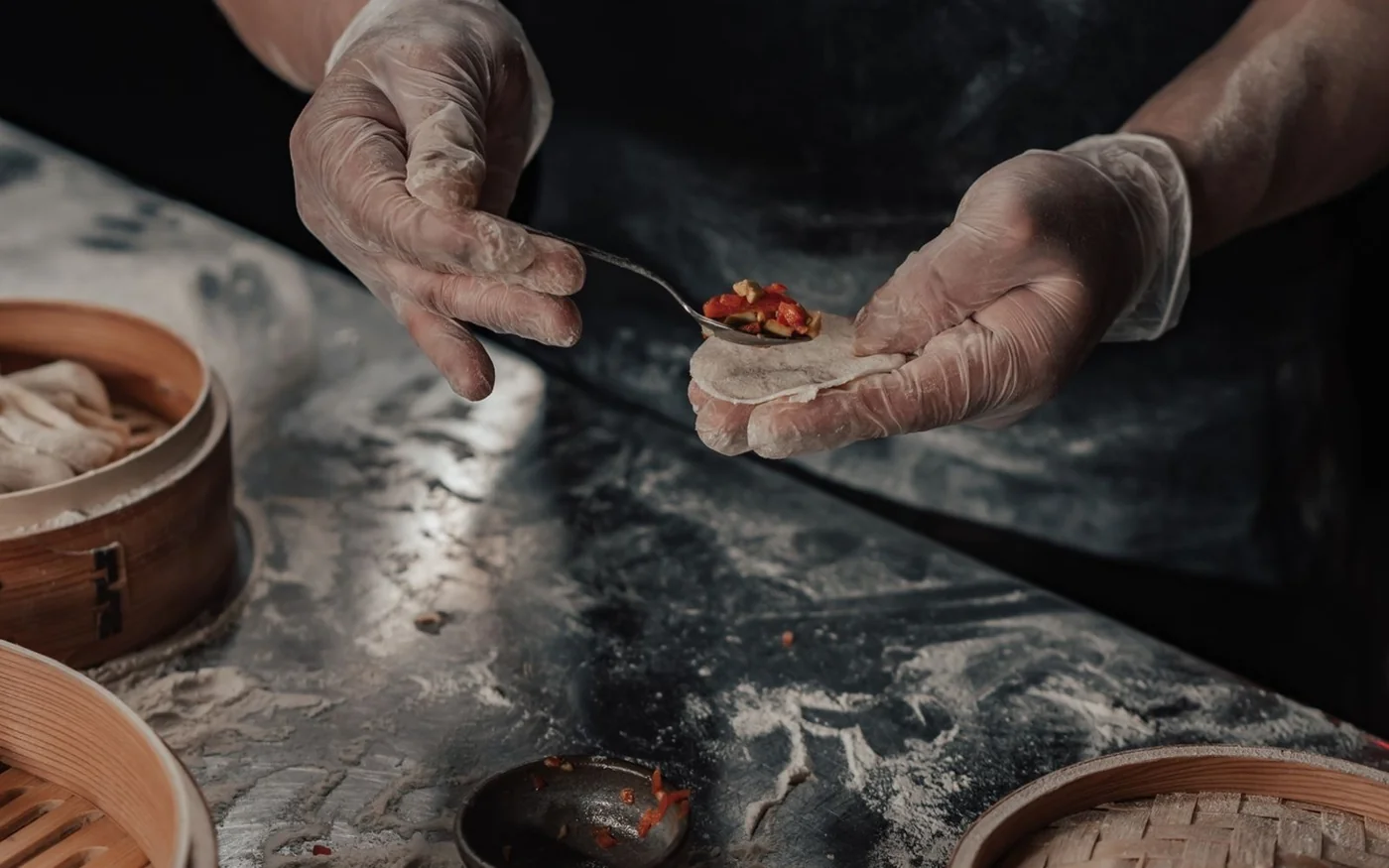
A jar of chilli oil and a box of frozen dumplings can complement each other on a plate. They ask different things of a supermarket buyer. A jar needs a reason to stand out among condiments and a reason for shoppers to buy another. A frozen product needs to earn room in a freezer, arrive in saleable condition and be easy for shoppers to find again. For Melody Mok, the Dubai founder of Curious Elephant, adding dumplings meant bringing a new reason to buy the brand to a retailer that had already backed it through its local business incubator. Spinneys interview with Melody Mok
Mok described the chicken and lemongrass dumpling as having launched exclusively with Spinneys. The retailer’s current catalogue identifies the product as made in the UAE and instructs shoppers to keep it frozen. Those records establish a launch and a listed product. The price paid to the supplier, the length and scope of exclusivity, and the sales performance belong to a different set of records. For a manufacturer evaluating its first grocery agreement, those are the questions to settle before committing production capacity. Spinneys chicken and lemongrass product listing
From a product people could taste to a range they could find
Curious Elephant dates its start in Dubai to 2020. Mok began with Asian-inspired chilli condiments and developed the business from there. By the time of its Spinneys incubator selection, it had also worked with Dubai food businesses. Its own account lists a collaboration with Maru Udon in 2021. That kind of collaboration puts a sauce into a dish someone can order. A supermarket listing asks the manufacturer to persuade a shopper who sees the jar among other products and may never have tried the dish. Curious Elephant’s founding story · Curious Elephant’s collaboration history
Spinneys introduced its local business incubator in 2020. Its 2021 programme page sought products that would suit supermarket retail and fit the retailer’s brand guidelines and values. In June 2022, The National reported that Curious Elephant had been selected in October 2021 and was preparing to supply shelves. The dates describe distinct steps. Selection signalled that the retailer was interested in developing the opportunity. A listing and a replenishment order would show what happened later in the relationship. The 2021 programme page is a historical account of that route into retail. Spinneys’ 2021 incubator page · The National’s contemporary reporting
For a first buyer conversation, bring the evidence that exists at the time. If the product has been sold online or at a market, show what the customer bought, the quantity and whether they came back. If a restaurant used it for a short collaboration, explain what the collaboration tested and who paid for the product. A repeat purchase at a stall and a restaurant promotion answer different questions. The buyer may want to know whether the same proposition holds when the shopper sees only the pack and a price label.
Why the freezer was a different proposition
In her interview with Spinneys, Mok connected the dumpling idea to a need she saw at home for a quick option. She also explained how it could pair with her chilli oil and give households a reason to buy a product they might eat more frequently than they would finish a condiment. The insight is a hypothesis about the occasion. A customer might use a jar a spoonful at a time and buy dumplings for several separate meals. A category team can test that idea through repeat orders, stock levels and the way customers shop for each product. Mok’s account of the frozen range
The two products create different delivery questions too. Spinneys’ Chinese chilli oil listing specifies cool, dry storage before opening and refrigeration afterwards. The chicken and lemongrass listing specifies frozen storage. For a supplier, the frozen format is a separate operating decision. Map the handoff from production to transport and receipt, and agree who checks condition and what happens to rejected stock. Before printing packaging, have the product owner review the exact item description, ingredients and storage instructions that the retailer will reproduce online. A listing team needs to know which product record to update if a pack size or formulation changes. Spinneys chilli oil listing
Curious Elephant’s November 2026 Instagram post shows its packaged dumplings alongside a prepared serving. Its caption presents the product as something to keep in the freezer for a quick snack. This is the brand’s consumer positioning, while the retail listing documents product information for the named item.
Define the launch commitment before building stock
A first retailer can offer shoppers a familiar place to find an unfamiliar product. In return it may ask the supplier to commit product, promotional effort or a period of exclusivity. For a founder evaluating such an offer, the question is which commitment improves the chances of learning whether the product can sell and be replenished. Give both sides a way to assess that result. A manufacturer can seek the opening store list or online scope, the expected initial order and a review date at which the parties can decide what to change.
If exclusivity comes up, discuss the product definition first. A specific flavour, a pack size and the entire category have very different implications for the manufacturer. The discussion should also identify which outlets and online channels the commitment covers, when it begins and ends, and what happens if the launch is delayed or distribution stays smaller than expected. Put the product, territory, channels and dates into the written terms. Curious Elephant’s founder describes exclusivity at launch for the chicken and lemongrass product. That account gives no basis to extend the claim to the full range or to present-day sales.
The written launch scope also helps with production. Suppose a fictional Dubai manufacturer can produce enough for twelve stores in its next batch. If the retailer plans to open in six and widen distribution only after a review, producing for all twelve immediately puts inventory and cash at risk. Ask whether the remaining stores are a commitment or a possible second phase. If the product is frozen, identify where the extra stock would sit and who would pay for storage while the decision is pending. A rollout schedule with explicit gates gives the buyer and production team something they can both plan around.
| Decision before launch | Detail to agree with the buyer | Evidence for the review |
|---|---|---|
| Product and footprint | Flavour, pack, opening branches and online channels | Actual listings and first orders by item |
| Delivery and acceptance | Delivery window, condition check and who handles rejected cases | Delivery and exception records by batch |
| Promotion and replenishment | Sampling or discount dates, funding and reorder responsibility | Stock and sales before, during and after promotion |
| Commercial review | Invoicing trigger, deductions, payment timing and review date | Order, invoice, settlement and credit notes |
Test what the order does to cash
A listing can look attractive on the shelf and still be difficult to finance. Start with the amount the retailer owes the manufacturer per pack, then identify which costs change as more packs are delivered. Include any agreed transport, promotional contribution or expected credits for which the supplier is responsible. Map when the supplier pays for ingredients, packaging, production and transport against the point when it can invoice and expects to collect. A supplier with enough margin on paper can still need working capital for a second order before the first one pays out.
Consider an illustrative order of 1,200 packs at AED 14 each. If the variable production and delivery cost is AED 10 a pack, the order generates AED 16,800 in invoice value against AED 12,000 of variable cost. That leaves AED 4,800 before overhead and other deductions. If the supplier also funds AED 1.50 a pack in launch promotion across the order, the contribution falls to AED 3,000. The numbers are fictional. They show why the cost of an introductory campaign belongs in the same model as the order, even if it appears later on a settlement statement.
Run a second version in which the order sells slowly and the buyer waits to replenish. Check how long the inventory stays within the supplier’s planned selling window and when cash arrives. Then run a fast-selling case. The supplier may have to book a production slot and reserve cold transport before the first invoice settles. In both cases, decide how much stock and cash the business can commit at one time. Write down the condition that would trigger a smaller order or a pause. That turns a broad worry about growth into a commercial decision the team can revisit with the buyer.
Separate a good launch from a reason to expand
Curious Elephant now lists several UAE stockists, and Spinneys presents its chilli oil and dumpling products in its incubator catalogue. A current listing shows how a shopper can discover a product. It gives limited insight into whether stock was available on a particular visit or how often each branch reorders. A manufacturer and buyer can answer those questions by reviewing the first order, stock availability, sales to shoppers and the replenishment decision separately. Curious Elephant stockist list · Spinneys incubator catalogue
Sales per store per week become easier to interpret when the report includes the days each store had stock available. If an item went out of stock early, a low weekly sales count may hide good sales during the days it was available. If a display or sampling event drove the strongest week, compare the weeks after the event before committing to a much wider rollout. Returns and rejected deliveries belong beside those numbers. A factory can learn that shoppers want the product and still discover that it needs a better way to fulfil repeat orders.
Before adding a branch or a flavour, ask which part of the first listing the team expects to repeat. If shoppers found the product when it was available, test whether the next branches can give it comparable visibility. If supply caused interruptions, fix that step before adding volume. If the opening order traded well only with a discount, check whether the economics work at the price the shopper will ordinarily see. The first agreement earns its value when it gives both sides enough evidence to decide what the next order should look like.
Set that review date while both sides still remember what they hoped the launch would prove. Bring the production planner as well as the person who sold the listing. The planner can explain why a promising sales week did or did not translate into a timely reorder. The buyer can say whether the product earned its place alongside the alternatives. Between them, they can agree whether the next order should repeat the trial, solve a specific problem or extend the range.



Comments (0)
No comments yet. Be the first!