

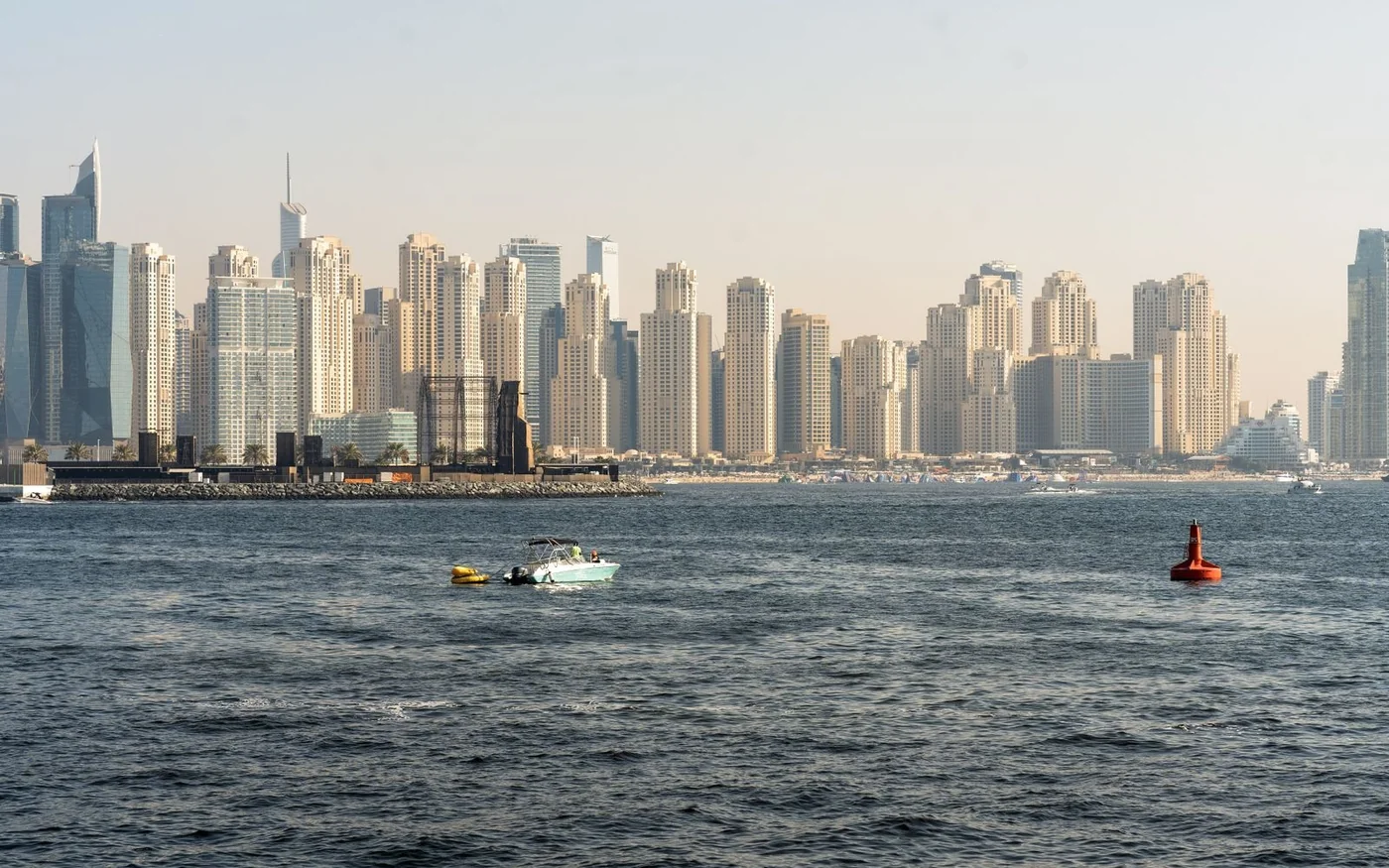
Dubai’s economic agenda runs to 2033, but some of its most visible results arrive every six months. That timing makes it easy to put numbers side by side that answer very different questions. The AED32 trillion announced at the launch describes the scale of the agenda’s combined targets. The AED473 billion in the October 2026 statistical release measures real output during the first six months of that year. A count of merchants joining a Dubai e-commerce programme measures something narrower still. All three tell readers something about Dubai, provided each number keeps its original unit, period and purpose.
D33 gives companies a view of where Dubai wants to expand economic activity and which institutions are building ways to do it. A Dubai wholesaler can trace one initiative down to a marketplace partnership it could test. An analyst studying citywide performance needs a consistent GDP series and a defensible starting point. This guide follows both routes, using official targets and selected results available on 6 November 2026. Government of Dubai Media Office launch release, Digital Dubai H1 2026 release.
What Dubai set out to achieve by 2033
Dubai launched D33 on 4 January 2023. Its central ambition is to double the size of the emirate’s economy by 2033 and strengthen its standing among the world’s leading cities. The launch framed the agenda around 100 projects and put a combined value of AED32 trillion on its economic targets over the decade. The individual targets specify different economic concepts and timescales. For example, the planned AED25.6 trillion in foreign trade covers goods and services over a decade, against AED14.2 trillion for the previous decade. Digital transformation carries an annual contribution target, while private investment has a decade-wide target. Invest in Dubai’s D33 overview, UAE government D33 summary.
| Published target or observation | What it measures | Evidence that would help track it |
|---|---|---|
| Double the size of Dubai’s economy by 2033 | Long-run economic size objective | A consistent Dubai GDP series with the relevant baseline and price basis |
| AED32 trillion | Combined value of economic targets presented at launch | Updates that reconcile the components with the original target definitions |
| AED25.6 trillion | Target for decade-wide foreign trade in goods and services | A comparable Dubai trade series covering both goods and services over the target period |
| AED650 billion | Target for cumulative foreign direct investment over the decade | An official Dubai FDI series whose scope matches the target |
| AED100 billion annually | Targeted annual economic contribution from digital transformation | A published definition and calculation that connect measured activity to that contribution |
| AED473 billion in H1 2026 | Measured real GDP for Dubai over six months | Same-period real GDP from the same release or statistical vintage |
| More than 2,400 new sellers | First-year Dubai Traders onboarding reported by programme operators | Evidence of activation, repeat sales and performance by seller cohort |
The trade and GDP rows deserve particular care. An imported product that moves through Dubai can be counted in trade statistics at its transaction value. Dubai GDP measures value added produced in the emirate, which can include the local margins and services associated with moving or selling that product. The two measures serve different purposes even when both rise. If a quarterly release covers goods only, its growth can be informative for freight and distribution businesses. The decade target still requires the service component, a matching geography and a consistent period definition. A UAE-wide total covers a different population of transactions and can support separate national context. Government of Dubai Media Office launch release.
The foreign investment target illustrates a subtler problem. The launch gives a historical annual average of AED32 billion, a prospective annual average of AED60 billion and a decade target of AED650 billion. Multiplying AED60 billion by ten gives AED600 billion. Record the average and cumulative targets as separately stated figures. An exact schedule for individual years would require a published reconciliation. A company preparing a board memo can preserve the original figures and explain the difference in one line, without inventing either an annual funding path or a revised target. Government of Dubai Media Office launch release.
What a measured GDP release tells us
Digital Dubai reported that real GDP reached approximately AED473 billion in H1 2026, compared with AED484 billion for H1 2025 in the same release. It put the year-on-year real change at minus 2.3%. It also reported roughly AED505 billion at current prices and nominal growth of 0.2%. Those figures can coexist because the real series measures output after accounting for price changes, while the current-price series values it at the prices of the period. Digital Dubai also identified growth in several activities, including finance and insurance, information and communication, health and social work, and construction. Growth in selected activities can occur alongside contraction across the economy as a whole. Digital Dubai H1 2026 release.
DET’s October Instagram carousel presents the AED473 billion headline alongside a caption linking the release to D33. The chart motifs on the skyline image provide visual context. The full statistical release supplies the price basis and comparable figure needed to interpret the change. Dubai Department of Economy and Tourism on Instagram.
Use the comparator printed with the result when interpreting the half-year change. If a spreadsheet has a different H1 2025 headline from an earlier release, check the national accounts series, coverage and revision date before connecting the two. And keep the annual assessment separate. A half-year figure describes the activity already recorded in that interval. Doubling it to estimate the year would assume the two halves were identical. Using one half-year movement to score the decade objective would require further assumptions about the baseline, price basis and pace of growth. For reference, a mathematically even doubling across ten annual intervals implies compound growth of about 7.18% a year. That calculation is an illustration of compounding. The launch release supplies the objective and the time horizon. Digital Dubai H1 2026 release, D33 launch release.
Why an investment ranking needs its denominator
The June 2026 government release on investment said Dubai attracted 1,253 announced greenfield FDI projects in 2025, up 10.5% from 2024, citing the Financial Times’ fDi Markets database. It also gave AED32.43 billion in greenfield FDI capital using that database. The count helps readers understand project activity. The capital amount adds information on scale within that defined category. Two years could have similar counts and very different capital figures if the mix shifted between small offices and large facilities. Government of Dubai Media Office 2025 FDI release.
Keep the announced greenfield count, associated capital and broader investment measures in separate rows. When assessing demand for services in Dubai, an announcement can indicate a potential customer and help identify the sector. A company budgeting staff time or equipment would need evidence of a Dubai operating site, an implementation timeline, a buyer with budget authority or a contract. At the city level, measuring progress toward the D33 FDI target calls for a compatible investment series across the relevant years. Counting announcements cannot establish how much capital was spent or when investment translated into local production. Government of Dubai Media Office 2025 FDI release, D33 launch release.
Dubai Traders shows how delivery can be measured
Dubai Traders gives a concrete example of how an agenda becomes a service that companies can use. In November 2025, the Dubai Department of Economy and Tourism and Dubai Chambers reported more than 2,400 new e-commerce sellers onboarded during the programme’s first year. They also reported supporting around 1,000 existing online sellers. The first number describes newly onboarded sellers. The second describes assistance provided to merchants already online. A January 2026 announcement then introduced a partnership with Tradeling for business-to-business commerce and wholesale. It separately reported more than 2,600 new sellers onboarded since the programme began. The January figure is cumulative, so adding it to the November figure would double count earlier activity. DET first-year Dubai Traders report, DET Tradeling partnership release.
A useful evaluation starts with what the programme can count directly. A merchant can finish onboarding, publish a catalogue and receive a first order. Each step has its own denominator. To see whether the channel continues to generate business, a later cohort report could track how many merchants stayed active after six months and how often customers ordered again. To estimate how much revenue the programme added, an evaluator would also have to account for purchases diverted from the merchant’s existing channels and demand that would have grown anyway. Those questions remain distinct from the value of giving small businesses a practical way to try selling online.
Imagine a Dubai supplier of café packaging testing wholesale orders through a marketplace. Listing a small set of products and quoting realistic delivery times would give it an early reading on buyer interest. Suppose the trial generated AED20,000 in orders, of which AED8,000 came from existing customers who had previously ordered directly. On those assumptions, AED12,000 came from buyers outside that existing customer group. To decide whether to extend the trial, the supplier would still compare product costs, platform fees, freight, returns, discounts and payment timing across the channels. It would also look for a second order from new buyers, because one-off purchases can make the first month appear stronger than later months. These figures illustrate how a Dubai business could test the channel.
How to keep a useful D33 tracker
Give each item four fields in addition to the number itself. Record the reporting body, geography, dates and what is being counted. For money amounts, note whether the figure is at current prices, in real terms, an estimate, a commitment or an observed expenditure. Then write the business decision the figure might affect. A citywide trade figure may justify looking at a logistics segment in more detail. A marketplace partnership can justify obtaining written terms and asking which products and sellers the channel supports. Actual order frequency and contribution can inform the decision to reserve warehouse space or hire staff.
Update a target line only when the responsible institution revises the target or its definition. Update a programme line when its operators publish comparable delivery data. Update a measured outcome line when a new statistical release arrives, and record when earlier periods are revised. A signed partnership, a merchant joining, an order being filled and a change in Dubai GDP can all belong in the same tracker. Give each its own row and use the evidence at the level of the decision it can support.
Frequently asked questions
Is AED32 trillion Dubai’s GDP target for a single year?
The launch presents AED32 trillion as the combined value of economic targets over the decade. The separate economic size objective is to double Dubai’s economy by 2033. D33 launch release.
Did Dubai’s economy grow in H1 2026?
Digital Dubai reported a 2.3% year-on-year fall in real GDP and a 0.2% rise at current prices. Several individual activities grew during the same period. Specify the price basis when using either headline. Digital Dubai H1 2026 release.
Can I use the Dubai Traders seller count to estimate my sales?
Use the count to understand the scale of the programme’s onboarding. For a sales forecast, use your own assortment, buyer demand, costs and repeat-order evidence. The first-year figure covers new sellers across the programme’s participating marketplaces. DET first-year Dubai Traders report.



Comments (0)
No comments yet. Be the first!