

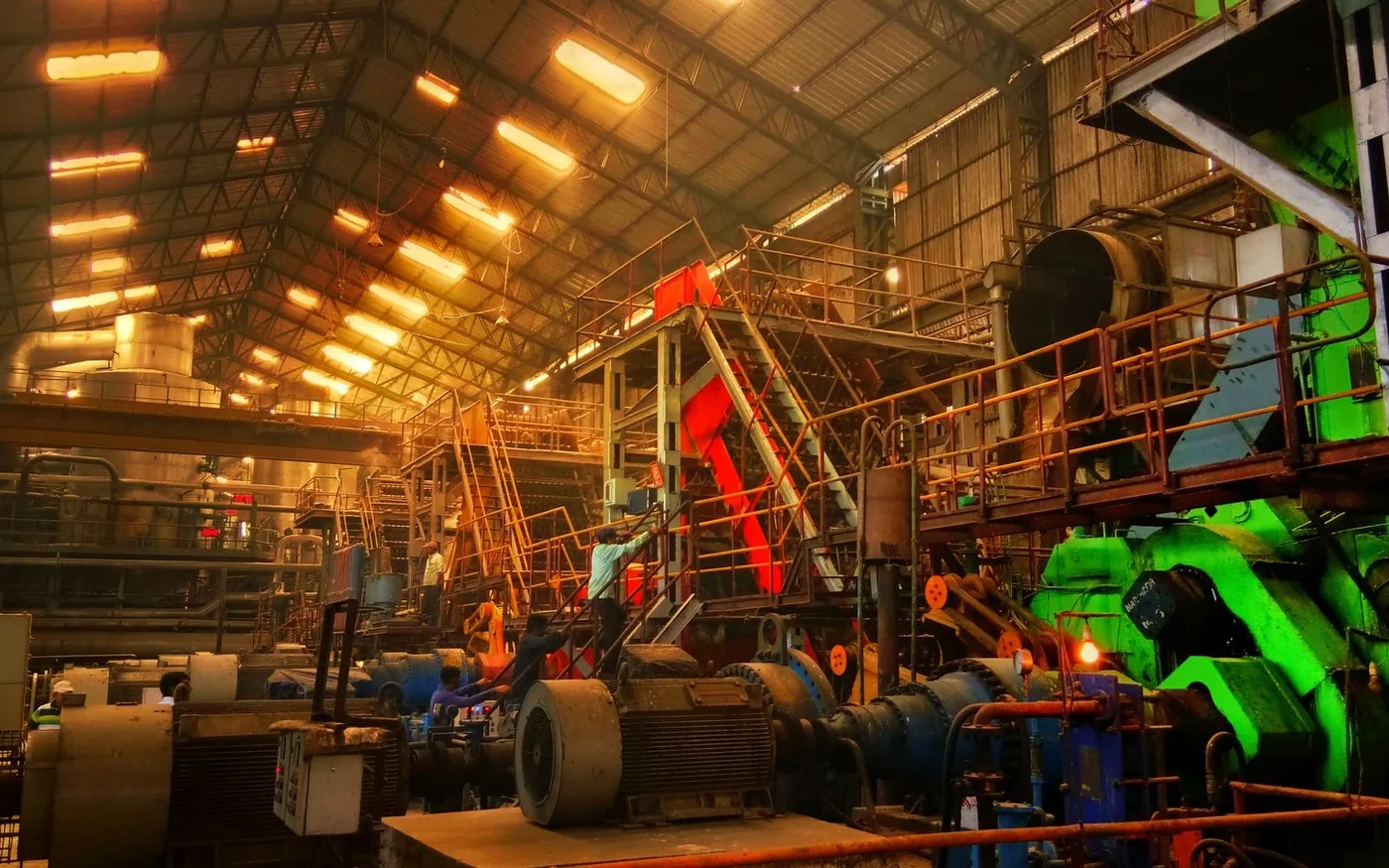
Energy operations leader Tayeb Al Awadhi’s account and the record of a new power block show why an aluminium production line depends on the reliability of the systems around it.
A production line can be ready to run and still depend on equipment that never touches the product. At Emirates Global Aluminium’s Jebel Ali smelter in Dubai, electricity is one of those dependencies. In a published EGA interview, Tayeb Al Awadhi, then senior vice president of energy, explained that prolonged loss of power could put a smelter at risk. His job involved keeping power available and preparing for contingencies at EGA’s two UAE sites. The practical measure of that work was what the smelter could continue doing when part of the power system was unavailable. EGA’s interview with Tayeb Al Awadhi
The public record gives a specific change to follow. EGA and its partners completed a new power block at Jebel Ali in 2021. EGA later reported a forced shutdown of the H-class turbine in 2024 and described working with the original equipment manufacturer to improve availability and reliability. Taken together, the records show how adding an asset changes the task of keeping a production process dependable. They do not disclose the smelter’s incident logs or show the amount of downtime the project prevented. EGA’s 2021 completion announcement, EGA’s 2024 first-half performance update, EGA’s 2024 sustainability report
Trace the dependency before changing the equipment
Jebel Ali is an operating system made up of several distinct processes. EGA describes seven potlines containing reduction cells and two casthouses to which liquid metal is transferred. It also identifies on-site anode manufacturing and generation capacity. For a manager, the point of describing those functions separately is that each has a different way of affecting the final output. An electricity problem at a smelter can reach beyond the equipment where it starts. An interruption in casting affects a different stage of the process. The first step in a reliability review is to establish which service was lost, which assets relied on it and what could continue. EGA’s Jebel Ali operations profile
Al Awadhi came through roles in operations, maintenance, projects and engineering, according to the company’s profile. The published conversation focuses on availability, reliability and efficiency and on preparing for disruptions. Those terms point to different questions. Availability asks whether capacity can be used when it is needed. Reliability asks how dependably the equipment performs over time. Efficiency compares what the equipment produces with what it consumes. A more efficient unit can still be unavailable when the plant needs it. A unit can also return to service while the production process it supports takes longer to recover.
EGA’s Made by Many reel highlights women working in the UAE industrial sector.
The reel supplies workforce context. The reliability record comes from the people and documents describing operations. For a manager trying to learn from a disruption, that means getting accounts from both the people who operate the utility and those who run the line. A utility log can show when a generator stopped or returned. A production log can show when the line could work again and whether output met its normal requirements. Linking those records is how a team sees what the asset event meant for the business.
Commissioning changes the operating plan
The 2021 announcement describes a roughly 600 MW power block built around a Siemens Energy H-class gas turbine. Siemens had separately announced a service agreement covering maintenance and repairs and on-site personnel support for the turbine and generator. The power block was intended to improve the efficiency of electricity generation. A change of this scale also changes what staff and contractors have to maintain, how they coordinate outages and what support they need when the equipment behaves unexpectedly. Siemens’ announcement of the service agreement
Commissioning is a milestone that a supplier and operator can document. It establishes that a new asset entered the operating system under defined conditions. To establish a reliability improvement, a manager needs evidence from the period after the change. Compare equipment behaviour across similar duty, record scheduled and unscheduled work separately, and ask whether any interruptions reached the production process. A period with fewer hours of operation can show fewer failures without showing that the machine is more dependable.
The service agreement is relevant because the equipment manufacturer and the operating team can have different information. The manufacturer may be able to interpret alarms and inspect components that the plant does not maintain itself. The production team knows which demand the utility has to serve, how changes are scheduled and what the downstream effects are. A useful handover gives each side enough information to decide what happens next. It also establishes who can return the asset to service and who confirms that normal production can resume.
What the forced shutdown adds to the record
EGA said in its 2024 first-half update that the H-class turbine entered a forced shutdown in April and that the issue was resolved in July. The company’s subsequent sustainability report says the original intent was to retire older turbines after commissioning and describes engagement with the manufacturer to improve reliability and availability. That gives the reader evidence of a specific event and a follow-up. It does not establish the cause of the shutdown, which production schedules changed or whether an individual potline stopped.
This distinction matters to the operating decision. An asset can be offline while another supply route serves the line. Conversely, an interruption shorter than a maintenance shift can matter greatly if there is no usable fallback. A manager needs to record both the time the equipment was unavailable and the time production could not use the service it required. If the two differ, the difference can tell the team whether the fallback did its job or whether recovery took longer elsewhere.
A simple illustration makes the point. Suppose a factory plans 400 hours of operation for a month. One utility unit is unavailable for eight hours, but alternate supply covers six of them. If the remaining two hours stop the line, the utility event represents eight hours of equipment unavailability and two hours of line interruption. If an additional hour is needed to resume normal output after supply returns, the production loss extends to three hours. These figures are illustrative. The public EGA records do not disclose equivalent calculations for Jebel Ali.
| Observation | Record to compare | Question it can answer |
|---|---|---|
| Utility equipment goes out of service | Start and end times, type of outage and operating hours | How long was the asset unavailable? |
| Another source takes over | Time and capacity of the fallback and demand it could serve | How much of the service remained available? |
| The line restarts | Time of supply restoration and time of stable production | Where did the recovery take longer? |
| A similar event happens later | Comparable duty, failure category and production impact | Did the intervention change recurrence or consequences? |
How a manager can show the line became more reliable
The comparison should start with a failure mode the team can define. A plant can group events by what stopped working, whether the stop was planned and how the event affected the line. Keep a record of events that were contained before production noticed them. They tell the team how often it relied on the fallback. If a backup quietly covers repeated failures, a measure based only on lost production hours can hide a worsening dependency.
Then choose a denominator that reflects exposure. Counting three failures in a month says less than comparing failures over similar operating hours and duty. A plant that changed its schedule or moved work to another line may see fewer events because the asset was used less. If a change in demand or product mix makes comparison difficult, keep the before-and-after figures and explain the difference. The report should make it possible to distinguish an improvement in the equipment from a change in what the equipment was asked to do.
It helps to separate improvements in failure frequency from improvements in recovery. A redesign may reduce the chance of a stop. Better access to parts or clearer escalation may shorten the time needed to return to normal. Both can make the production line more dependable, but each requires a different kind of evidence. A manager can check recurrence by comparing similar events over time. To assess recovery, compare how long each step took and whether the line resumed stable production. The next repair can then test whether the change holds under ordinary working conditions.
A review should check whether the restoration simply moved the constraint. A line may reach its previous rate shortly after an outage but spend the rest of the shift using more labour, rechecking product or running with less reserve capacity. Put those observations beside the restart time. When the team repeats the comparison, use the same definition of normal output and record where the conditions differ. That gives the production lead a way to judge whether the recovery was complete and the maintenance lead a way to identify the work still needed.
The analysis should also assign ownership after the initial repair. If the same part fails again, the person who can diagnose it may be different from the person who can authorise a maintenance window. If production carries the cost of the stop but maintenance controls the budget, both need to see the same event history. A short record of the decision can identify which measure should improve, when it will be reviewed and what would trigger another change. That is more useful than recording a repair as closed and waiting for the next call.
For an operations leader, efficiency and environmental performance belong beside those reliability measures. EGA’s completion release gave expected benefits for the power block. Its later reporting disclosed an availability issue. Both can be true because they describe different properties of the same asset. If an efficient unit is unavailable, the utility may have to rely on other equipment. The production team should be able to see how that changes both the ability to deliver power and the cost of doing it. The public evidence establishes the project and the later outage. It provides no common data series from which to calculate the net effect on the smelter’s reliability.
Al Awadhi’s account explains why the production team has to look beyond the line itself. The project record shows a new power asset entering service, a later forced outage and work with its manufacturer. A manager making a similar change needs to follow the same chain through to the output. Show which utility service changed, whether production could continue during an interruption and what happened when the equipment came back. Those measures establish whether the investment improved the line’s ability to keep working.



Comments (0)
No comments yet. Be the first!