

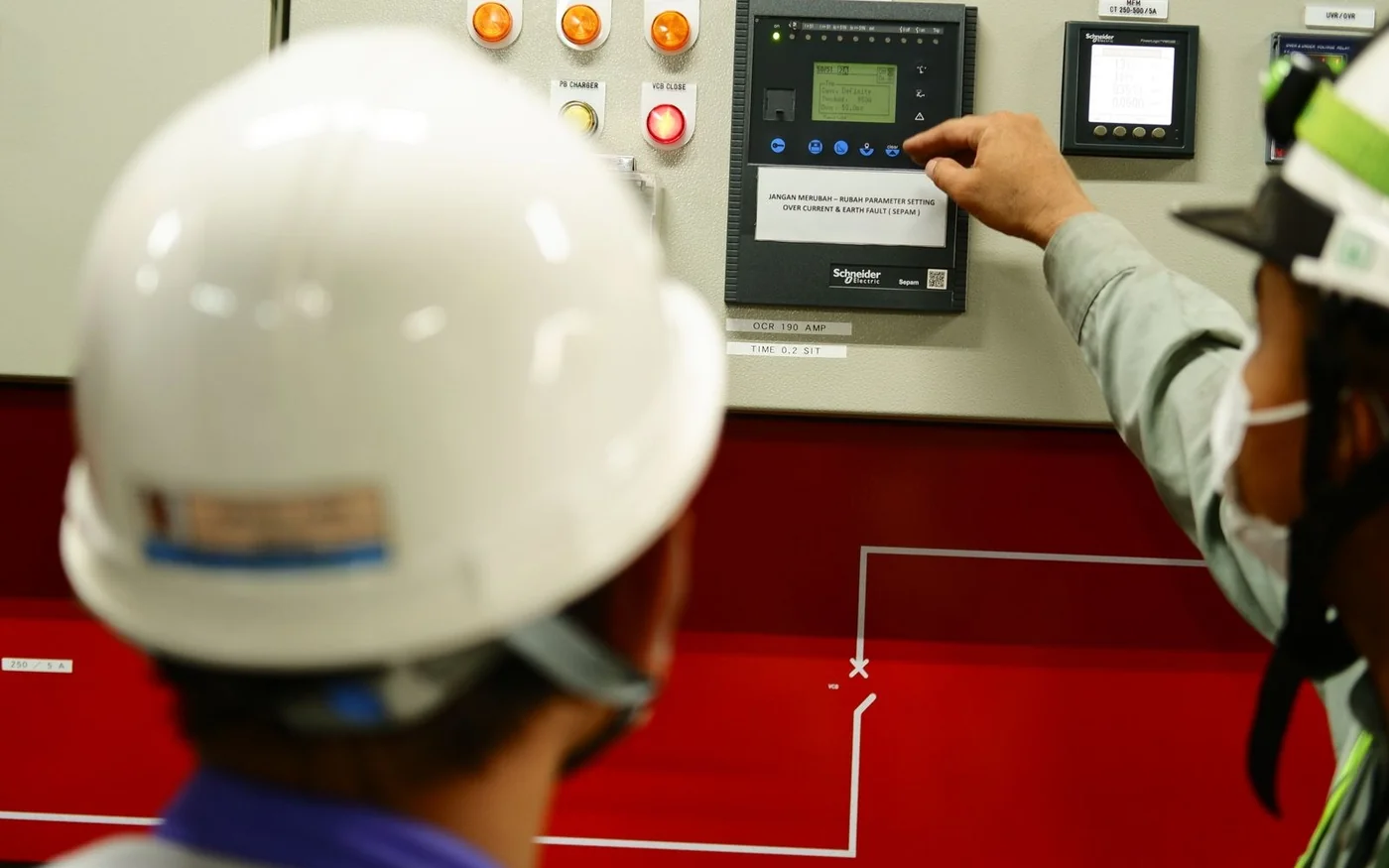
Fatema Al Nuaimi trained as a chemical engineer, but the first job she described at ADNOC was in marketing. In an interview with The National, she recalled joining in 1999 and using her engineering education to understand the language of the business. At her manager’s request she later moved into engineering, where going on site brought her into contact with the work behind those commercial conversations. By the time of the interview, she was leading ADNOC LNG and overseeing its operations on Das Island. Al Nuaimi’s interview with The National
ADNOC Gas appointed her chief executive effective 1 January 2025. Between those stages, company records describe roles in gas strategy and master planning and in downstream business management. Her career is an example of how the decisions a specialist handles can widen over time. A technical role can ask whether a process works at one site. A planning role can ask what several assets can deliver together. The executive role has to turn those assessments into commitments the organisation can execute and explain. ADNOC Gas 2024 integrated report · ADNOC Gas executive management
Learn how the promise connects to the plant
Al Nuaimi described her technical training as useful in her marketing work. She also recalled arriving on site at a time when the workplace was unused to women working there and did not have protective overalls for them. In the same interview, she emphasised the importance of learning the business on site and encouraged young Emirati women with technical training to use it. Her account puts two things in view. A specialist learns how the work is done by seeing it up close. The employer determines whether people get the equipment, access and assignments that make such learning possible. Al Nuaimi’s account of moving into engineering
ADNOC Group’s February 2026 Instagram reel promotes its separate Guardians of Energy campaign about people working in the UAE energy industry. It offers institutional context for field careers alongside Al Nuaimi’s own published account.
A specialist considering a commercial role can start by tracing one commitment backwards. If the sales team promises a volume by a certain date, ask which equipment, maintenance decisions and people have to be available to deliver it. If the operations team raises a limit, ask what would happen to customer orders if that limit remained in place. The objective is to understand which condition determines the promise. A technical explanation becomes useful to another team when that team knows what decision it can make with it.
The reverse exercise helps a commercial employee moving closer to operations. Walk one request from the customer through planning and into the site schedule. Listen for the gap between the language people use about the same request. A date that means delivery to a customer may mean equipment ready for testing to an engineer. Clarify the milestone and the person responsible for confirming it. Those small distinctions become more consequential when the employee starts coordinating work across several teams.
Move from a site decision to a planning decision
ADNOC Gas’s 2024 integrated report says Al Nuaimi managed ADNOC’s gas strategy and master planning unit, which provided strategic insight across the group’s gas resources with attention to value, profitability and future UAE demand. Its 2025 integrated report identifies her later role as executive vice president for downstream business management before the ADNOC Gas appointment. The employer’s account describes oversight across several assets and work to improve how the value chain operated. These descriptions give a view of how her remit widened. They do not give a transcript of the decisions she made in each post. ADNOC Gas 2024 integrated report · ADNOC Gas 2025 integrated report
Consider a fictional UAE manufacturer with two processing lines. An engineer can identify a change that lets one line produce more units. A planner also needs to know whether the next stage can handle the extra material and whether customers will buy the additional output at the time it becomes available. If the rest of the site cannot keep up, funding the change may move the bottleneck to another point. The engineer’s calculation still matters. The planner adds a question about which constraint determines the result for the whole operation.
One way to learn that broader work is to take responsibility for a forecast that other functions use. Document the capacity assumption, the maintenance window and the demand range. Ask colleagues who own each input to say how far ahead they can confirm it. In the next review, explain what changed since the earlier forecast and which choice follows from it. The task exercises a skill that carries into leadership. A forecast becomes a basis for action when someone can see which assumptions are firm and which would change the decision.
| Change in scope | Example of a decision to own | Evidence the next team needs |
|---|---|---|
| Technical specialist | Whether a proposed change can work within the operating limits | Test results, limitations and observed exceptions |
| Operations lead | When to make the change and who will carry it out | Staffing, maintenance window and recovery plan |
| Portfolio planner | Which investment or constraint to address first | Comparable options, dependencies and demand assumptions |
| Executive | Which commitments the organisation should make and how to review them | Named owners, resources, risks and checkpoints |
What an executive decision looks like in public
In June 2025, ADNOC Gas announced a final investment decision and around US$5 billion in contracts for the first phase of its Rich Gas Development project. The company said the work covered four sites in Abu Dhabi: Asab, Buhasa, Habshan and Das Island. It described the phase as expanding or improving existing processing assets. Al Nuaimi presented the decision in the company release as part of its growth strategy. The release records a corporate decision and planned work. It does not show the internal discussion or establish the eventual outcome of the project. ADNOC Gas Rich Gas Development announcement
The release is useful as a public example of the scale and type of commitment an executive may have to explain. Four sites mean several operating teams, contractors and schedules can affect the result. A business leader needs a view of how the pieces fit together and which work has to happen first. The corporate governance section of the 2025 integrated report describes the board’s delegation to the CEO for strategic direction and day-to-day management, subject to limits. The authority to decide and the responsibility to report back are part of the same job. ADNOC Gas 2025 integrated report, corporate governance
At a smaller UAE company, a comparable exercise might be a decision to expand a production line while continuing to fulfil orders. Give the person making the decision a short record that identifies the decision, the alternatives and what would lead the team to change course. Assign an owner to each dependency and schedule a review before the company has to make the next commitment. Ask the team to explain what it knows now, what it expects and what must still be tested. That makes it easier to explain the investment to people who do not work with the equipment every day.
Keep technical judgment visible after delegating
When a specialist takes on a wider remit, their former colleagues may still bring them every difficult technical choice. Agree which decisions the technical team can make and what merits escalation. For example, an engineer may be able to change a test sequence within approved limits, while a change that affects a customer delivery date needs an operating and commercial review. A decision record can show which person owns the answer, which colleagues need to be consulted and when the answer must be revisited.
Delegation also gives the new leader a way to stay close to the evidence without becoming the only person who can interpret it. In a review, ask the engineer to explain the observed result, the operating team to describe whether it can be repeated and the commercial team to say which commitment depends on it. If those accounts conflict, identify the condition that would settle the disagreement. A leader may have to decide before every uncertainty is resolved. The record can still show which assumption the decision rests on and what information would warrant changing it.
Build experience with responsibility for the result
An aspiring leader can look for a stretch assignment that has a genuine decision attached to it. A maintenance specialist could coordinate the timing of a planned shutdown with the people responsible for stock, customer commitments and restart. Start by asking who can approve a change and which limits cannot be crossed. Then keep a record of the competing needs and how the final plan accounts for them. When the work ends, review the result with the teams affected. That review helps the specialist learn where their judgment held up and where they relied too heavily on information from one part of the business.
Managers who want to develop more technical leaders can create such assignments deliberately. Give the specialist access to both the operation and the commercial review. Introduce them to the people who own budgets or customer commitments and make clear which decisions they can make themselves. Where site work is part of the opportunity, make participation practicable through equipment, preparation and supervision. Al Nuaimi’s interview makes the physical side of access visible. ADNOC Gas’s biography also identifies her as the inaugural chair of ADNOC’s Gender Balance Committee, established in 2016. The company describes that work as supporting participation in technical, operational and leadership roles. Al Nuaimi’s interview · ADNOC Gas executive biography
Keep a work record that shows more than titles. For one assignment, describe the original constraint, the people affected, the decision you were trusted to make and what happened after it was made. If the expected result fell short, explain which assumption was wrong and what you did next. That record lets a future manager see whether you understand the consequences of a decision across functions. It also gives you a way to choose a next role with a specific gap in mind, such as more responsibility for customer delivery or for how investment choices are made.
A manager reviewing that record can ask who would have caught a mistaken assumption and whether the team could have reversed the decision. Those questions help distinguish an assignment that built judgment from one that simply added meetings.
Al Nuaimi’s route passed through commercial work, engineering, site leadership and portfolio responsibility. For a specialist weighing a change of role, the useful question is what the new assignment will let them decide and whose work they will need to understand to make that decision well. A move that gives them responsibility for a commitment across two functions can teach them something a larger title alone cannot.



Comments (0)
No comments yet. Be the first!