

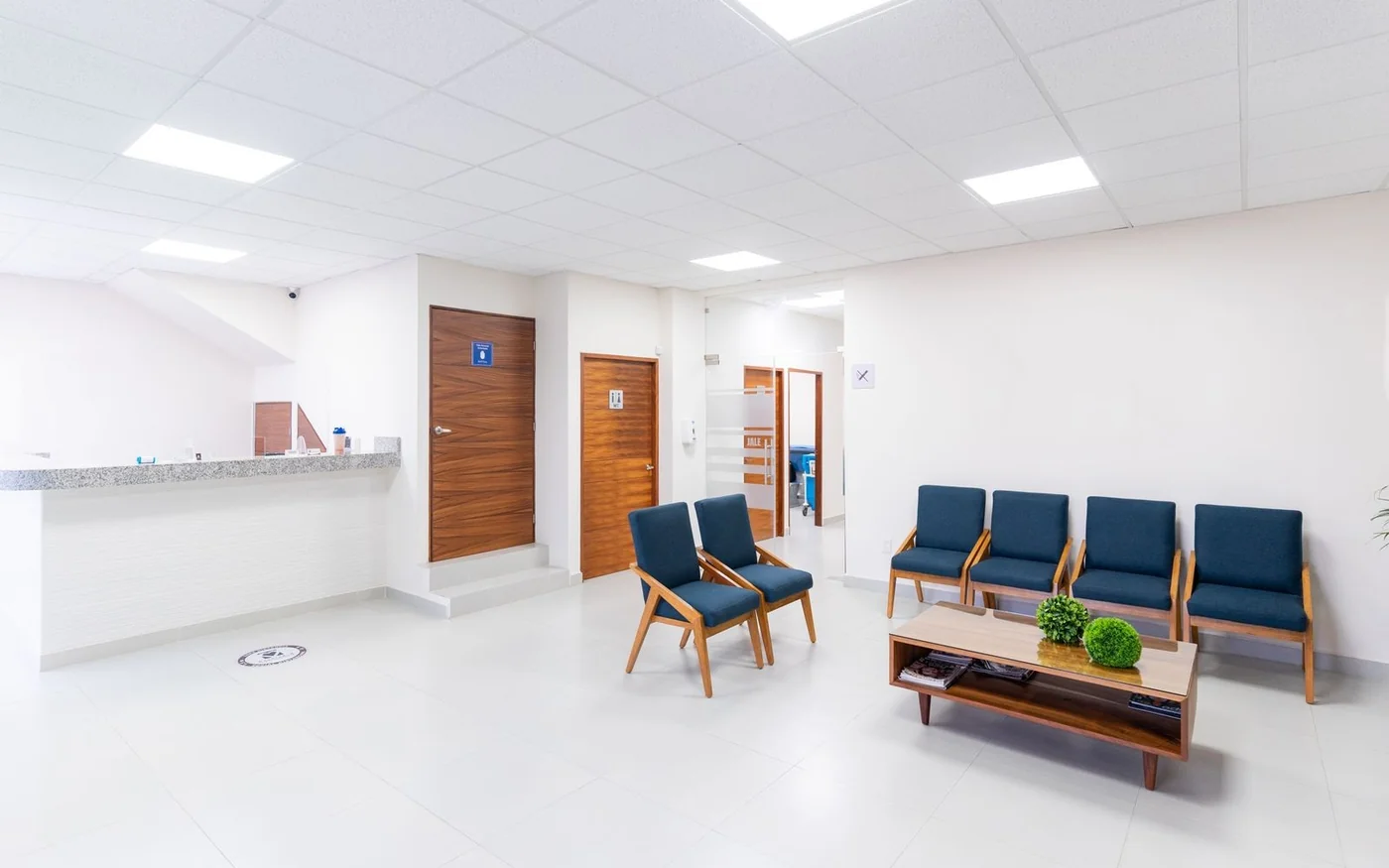
The UAE clinic investment led by Hazem Abu Khalaf shows how a growth investor can assess a local operation, add capacity and prepare for a sale. The public record also shows how much an opening announcement leaves unanswered.
A new clinic is evidence that a business has put capacity in place. It takes more information to establish how much demand that capacity serves, what it costs to operate and whether the owner could repeat the investment elsewhere. Those distinctions matter when a growth investor is deciding whether to fund an expansion and when a founder is explaining what a round will buy.
Gulf Capital acquired a controlling stake in the UAE-based fertility business that became ART Fertility Clinics in January 2020, according to its investment account. It identifies Hazem Abu Khalaf as the deal lead. In June 2024 the firm announced the inauguration of ART’s Al Ain clinic. In July 2025 it announced the sale of its majority stake in the operations that included the UAE clinics to IVI-RMA Global. These milestones provide a public view of an acquisition, an operating investment and an exit. The public documents give less visibility into the financial evidence that underpinned individual decisions. Gulf Capital’s investment overview, Gulf Capital’s profile of Hazem Abu Khalaf, Gulf Capital’s sale announcement
Begin with what the investor acquired
Gulf Capital describes the original investment as a carve-out. The investor acquired a controlling stake in a business that had been part of another corporate group. A carve-out creates a different set of operating questions from an investment in a standalone company. A business may have its own customers and staff while still relying on a parent for systems, procurement, oversight or a recognised brand. A buyer needs to understand what transfers, what will have to be replaced and how long the business can operate during the transition.
Gulf Capital describes itself as investing through private equity, private debt and real estate. Its public private equity overview emphasises thematic research and working with management on growth. In a published Private Equity International interview, Gulf Capital chief executive Karim El Solh and colleagues described using equity and debt in growth investing. Their remarks explain why the form of capital matters when a company has an expansion plan. They do not establish the debt structure of ART or give the investment committee’s underwriting for this transaction. Gulf Capital’s current firm overview, Private Equity International’s interview with Gulf Capital executives
A founder discussing expansion can make a related distinction in the use of funds. Part of a budget may pay for the next site, equipment and the people needed to open it. Another part may fund systems or oversight that allow the existing business to support more sites. A business that needs a new platform to operate independently faces a different funding need from one that can put the same operating model into another building. Separate the two in the plan so the investor can see what each expense makes possible.
What the Al Ain opening proves
Gulf Capital’s June 2024 announcement identifies an inaugurated facility in Al Ain, describes it as 25,000 square feet and lists operating-room, laboratory and related infrastructure. At the opening, El Solh, identified as chairman of ART and chief executive of Gulf Capital, presented the site as an extension of the business’s UAE operations after expansion in Abu Dhabi and Dubai. That is an attributable account of the operating rationale. The release does not disclose the Al Ain site’s budget, booked demand, operating margin or expected time to recover the investment. Gulf Capital’s Al Ain opening announcement
A Digital Dubai Instagram carousel shows a clinician in a separate example of gathering information from people working in the sector.
An opening tells the reader where the business added capacity. To assess the case for that capacity, a growth investor can ask what problem the new location solves for the people who will use it. In an illustrative UAE specialty clinic, a team might examine where enquiries come from, which referrals turn into appointments and which appointments are lost because people cannot reach the site or the available times do not work. Those measures can help distinguish a location that adds access from one that mostly shifts existing activity between sites. The ART releases do not publish those measures for Al Ain.
Available space is also different from usable capacity. The investor can ask how many appointments the site can deliver with the staff actually scheduled, which activities require a particular room or specialist and whether one step slows down the rest of the operation. Filling one schedule may create a queue elsewhere. An operating plan should show how the limiting resource changes as the business grows. That is where a useful discussion of expansion costs begins.
Demand evidence should also account for who sends business to the site. A service company can have a large potential catchment and still depend heavily on a handful of referral or distribution relationships. An investor can compare the total enquiries, the number of distinct sources and the share that becomes completed work. If a source accounts for much of the forecast, the plan should show what happens if it sends fewer people. The aim is to distinguish a durable source of demand from a favourable early period.
For a business that already has sites in Abu Dhabi and Dubai, comparing operating histories could also surface differences the new location will need to absorb. The sites might have different staffing costs or collection patterns even if their buildings offer similar services. The purpose of a comparison is to show which assumptions transfer and which have to be tested locally. A sensible expansion forecast can make the existing site its starting point and then explain each adjustment. The public ART announcements establish its UAE footprint and provide no such operating comparison.
The decision depends on how capacity turns into cash
Consider an illustrative specialty service site with 500 available appointments a month after staffing and scheduling constraints. Suppose it earns AED 600 in net revenue per completed appointment and incurs AED 200 of direct costs. At AED 120,000 in monthly fixed costs, it would need 300 completed appointments to cover those costs, or 60% of the assumed capacity. The figures are hypothetical and exclude fit-out recovery, financing and other cash requirements.
| Monthly position | Completed appointments | Contribution after direct costs | Result against fixed costs |
|---|---|---|---|
| Early ramp | 200 | AED 80,000 | AED 40,000 shortfall |
| Operating break-even | 300 | AED 120,000 | AED 0 |
| Higher utilisation | 400 | AED 160,000 | AED 40,000 surplus |
The site could still run short of cash even if it eventually reaches break-even. It may pay staff and suppliers before it collects revenue. A useful forecast shows when money leaves the business and when it arrives, with sensitivity to slower bookings, higher direct costs and delayed collection. For an investor, that turns a headline funding request into an explanation of how much runway the business needs before it can support its own growth. It also lets management define what it would change if demand arrives later than expected.
The founder can help the investor test the assumptions by showing the same measures from an existing site. Use completed activity rather than bookings if cancellations materially affect the result. Show costs that change with activity separately from costs that are committed even in a slow month. If the new site will rely on shared staff or equipment, include the cost of that support and ask whether the original site can still perform at the level assumed in the group forecast. A new location can show an attractive operating margin if the budget leaves out services paid for elsewhere.
The measures should also help a board decide whether to release more capital. A site may meet its opening date while falling short of its staffing plan. Another may serve more people than expected while collecting less cash per completed appointment. For each milestone, record what the board should see, who reports it and what action follows if the result differs from the plan. A staged budget can then respond to what management learns instead of treating the whole expansion as a single irreversible decision.
A practical expansion case also names the people who will build and run the next site. An investor might ask how long the current leadership team can oversee two locations, which responsibilities need to move to a new manager and whether the group has enough oversight if a hiring milestone slips. A credible staffing plan specifies who owns the work before opening and who takes over once the site has customers. It can also include the period when the original team will carry both roles. Treat that period as a cost and a capacity constraint in the plan.
The board can then connect the operating evidence to the investment decision. At each review, it can compare the amount already committed, the remaining costs and the current evidence of demand. If the team needs a further tranche, the question is what the additional cash will achieve and whether the next milestone still tests the assumptions that justified opening.
Read the exit as a separate event
Gulf Capital’s July 2025 announcement says its sale to IVI-RMA Global included three UAE clinics. IVI’s public history independently identifies ART among the businesses that joined the group in 2025. The sale shows that another owner was willing to acquire the operations in the transaction. The cited announcement does not disclose the price, cash proceeds or a realised return. The seller’s expectation of a strong return is an attributed assessment, and the public record reviewed here cannot show how much of that expectation came from the Al Ain site. IVI’s account of its corporate history
The case also shows why it pays to keep geographic and transaction boundaries clear. The opening announcement describes a single UAE facility. The exit announcement covers a wider set of assets and expressly excludes some operations that Gulf Capital retained. An analyst cannot take a network-wide total and use it as evidence of what happened in one clinic. The same discipline applies inside the business. A board needs to know whether a figure comes from one site, from the UAE business or from a broader group before it uses it to authorise an expansion.
The public case gives a founder three distinct milestones to work with. The investor acquired an operating platform, the business added identifiable capacity in Al Ain and a later buyer acquired operations that included the UAE clinics. The capital discussion between those milestones is where the commercial evidence matters most. Show who will use the new capacity, what it takes to serve them and how much cash the business needs while utilisation grows. That gives an investor a basis to judge an expansion before there is an opening or sale to announce.



Comments (0)
No comments yet. Be the first!