

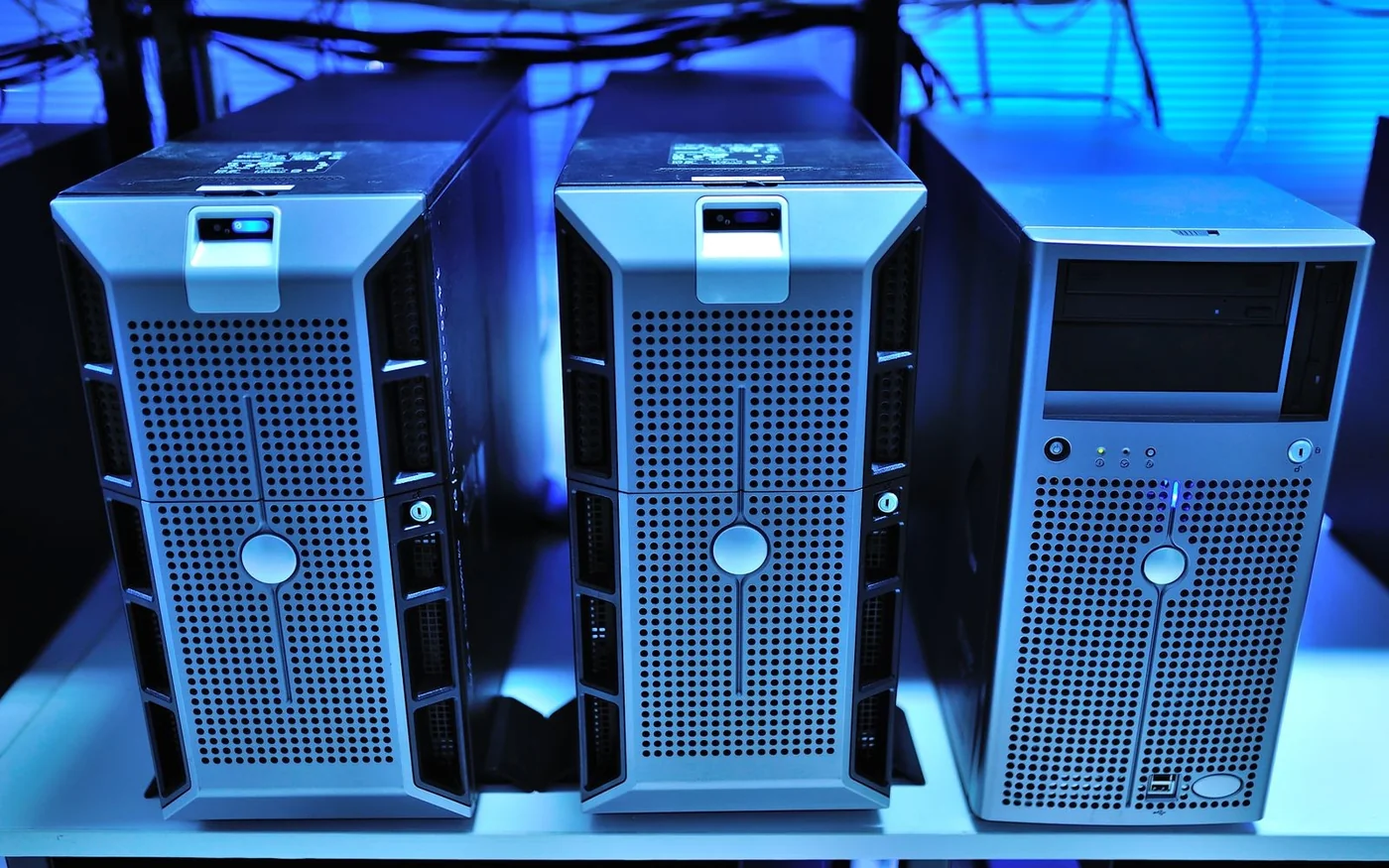
A UAE company looking for computing capacity sees an announcement for a gigawatt-scale campus. Its procurement team needs something much smaller and more specific. It wants a set of cabinets in a named facility, with enough power and cooling for its equipment, a carrier connection and an agreed handover date. The campus announcement tells the team about the scale of a plan. It does not answer whether the company can order the required service for its deployment window.
Read a capacity figure with three questions in mind. What is being measured? Which site or phase does it cover? What event has actually happened? In the UAE, the same announcement can mention a campus, a cluster inside it and an initial phase of that cluster. Record the relationships before adding numbers, and use later evidence to move each phase from the pipeline to delivered capacity.
Identify the unit and boundary
A figure in megawatts describes power, but the announcement needs to tell you what equipment or boundary the figure covers. It might refer to power available to IT equipment, the total load for the facility or a planned utility connection. A campus can have a large power envelope and still be building the halls, cooling and electrical systems needed to use it. Where the basis is unclear, retain the publisher's wording and label the basis as undisclosed.
Cabinets, floor space and accelerator counts answer other questions. A floor area tells a reader something about the space, while the cabinet specification helps a buyer judge what can fit there. Neither establishes how much compatible space is free. A chip count says little about when equipment is installed, networked and ready to use. Ask for the unit that corresponds to the product. A colocation customer wants a usable allocation of space and power. A buyer of managed AI compute needs access to the hardware and service configuration it can actually book.
| Stage | Evidence that supports it | What remains to verify |
|---|---|---|
| Announced | Dated developer or operator statement with an identified project | Funding, power, dates and scope |
| Under construction | Dated site update identifying the phase and works | Commissioning and operator acceptance |
| Energized or commissioned | Named phase, test scope and operator milestone | What the installed systems can support in service |
| Open or customer-ready | Operator confirmation of the phase and product on offer | Fit, remaining inventory and date for a specific buyer |
| In use | Evidence of workloads or occupancy on the named phase | Remaining capacity and suitability for other tenants |
These stages describe the evidence a reader can ask for. Developers may use different names. A launch can refer to a project announcement, a building opening or a service becoming available. Keep the original verb in the notes and explain what the source documents. Where only part of a building is ready, attach the milestone to that part.
Keep the UAE examples at the level their sources support
G42’s Stargate UAE announcement describes a 1 GW compute cluster within a wider 5 GW campus in Abu Dhabi. It says the first 200 MW AI cluster was expected to go live in 2026. The 200 MW is a first tranche of the larger cluster as described in the announcement. The cluster itself is part of the campus. Adding all three figures would count overlapping scopes. The announcement provides an expectation for the initial tranche. A reader needs dated commissioning or service evidence to report how much has since come online. G42 Stargate UAE announcement
Microsoft and G42 also announced a 200 MW expansion through Khazna Data Centers. The Microsoft release says the expansion was expected to start coming online before the end of 2026. “Start” matters. It leaves the size of the first live tranche open. Two UAE announcements with the same number can describe different scopes. Track the names, counterparties and phases separately until a source shows whether any capacity overlaps. Microsoft and G42 expansion announcement
In Dubai, DEWA’s 23 January 2026 update on Moro Hub’s Warsan project describes construction of phase one, endorsement of the phase-two award and planned overall capacity exceeding 100 MW. It schedules the first phase for the second half of 2026. The statement establishes what the authority reported on the visit date. It leaves the first phase’s megawatts and any later handover to be verified separately. The planned overall figure cannot serve as a first-phase delivery number. DEWA’s Warsan construction update
A DEWA infrastructure reel shows how an authority presents development visually. Treat that kind of material as context. A phase-level capacity claim needs a dated record that identifies the facility, the milestone and the capacity it covers.
Equinix supplies a useful comparison. Its 2023 DX3 release announces the opening of its third Dubai data centre and describes 1,800 cabinets across two phases once fully built out. The operator’s current facility page gives DX3 specifications including colocation area and minimum cabinet density. The original opening and the full build-out figure can both be accurate while referring to different states. The facility page is a better starting point for checking whether the product fits a buyer’s equipment. An orderable allocation and date still require confirmation from the operator. Equinix DX3 opening announcement and Equinix DX3 specifications
Check what changed after the announcement
Start a record for each site and phase. Note the developer, operator, location, announcement date, stated unit and latest verified milestone. Keep the original target and any later revision as separate entries. When a contractor describes a completion target, label that evidence by who issued it and what the contractor is delivering. An operator may still need to integrate systems, obtain acceptance and prepare the facility for customers after the contractor finishes its scope.
McLaren’s announcement of its appointment to deliver the next phase of DX3 sets a March 2026 completion target for that phase. The announcement identifies a construction scope and a planned date. To update a tracker after that date, ask for a later record confirming the relevant milestone. A facility listing can give useful current specifications while leaving the status and cabinet count of the particular construction phase open. Keep those entries separate so a reader can see which evidence would close the gap. McLaren’s DX3 phase announcement
Look for the next evidence the project should produce. A project in construction may issue a progress report. A site approaching operation may publish commissioning, service or handover information. A marketed facility may have a product specification. A buyer looking for rack space should ask for an availability statement for the relevant configuration and date. Where a provider declines to disclose capacity or occupancy, report the limit. Lack of public evidence leaves the status uncertain and does not establish a delay.
Use the date of the event as well as the date of publication. A new article can repeat last year’s target without updating it. Ask whether the latest release describes work already completed, an upcoming opening or a revised schedule. Keep the evidence for every milestone so another reader can reconstruct the history. If a source describes the same phase with a different figure, check whether the change is scope, unit or a revision before treating it as additional supply.
Reconcile the figures before building a market total
Consider a hypothetical UAE campus planned for 120 MW of IT load. The developer announces a 30 MW first phase. Later, the operator confirms 20 MW commissioned in that phase, with 15 MW committed to customers. The market tracker can record 120 MW planned, 30 MW in first-phase scope and 20 MW commissioned. If the 15 MW commitment refers to that same 20 MW, the arithmetic leaves 5 MW uncommitted. A buyer still needs to check whether that amount is deliverable in the required halls, at the required density and within the required window.
Check the denominator when someone cites occupancy or take-up. A share of the commissioned capacity answers a different question from a share of the planned campus. If 15 MW is committed against the 20 MW commissioned, the share is 75%. If the announcement applies that same 15 MW to the first-phase design of 30 MW, the share is 50%. Neither figure describes live customer load unless the source says the committed customers are using it. Reservations, contracted take-up and equipment in operation can occur at different times.
Keep announced power and delivered cabinets in separate columns unless the operator gives a basis for conversion. Two facilities with the same number of cabinets may support very different loads per cabinet. Even within one hall, power and cooling can constrain which cabinets are usable for particular equipment. Aggregate only figures with matching units, scope and stage, and keep joint announcements under one project record when they describe the same capacity.
When a figure describes the whole facility, ask whether it includes electrical and cooling overhead or only the IT load. Do not apply a fixed conversion across facilities. The relationship depends on the design, measurement boundary and operating conditions. If the operator publishes a ratio, check whether it is a design target or a measurement from operation and whether it covers the same phase. A tracker can retain an undisclosed basis without using the number in its aggregate.
Verify the service a UAE buyer can actually book
Ask for the facility and phase, the proposed cabinet or power allocation, the cooling and carrier options, and the date each is available. Check what the service order commits the operator to deliver. If the capacity depends on a future milestone, ask what happens if the date moves. A reservation subject to commissioning may serve a long-term plan while leaving a near-term deployment exposed.
Also ask whether the stated capacity is a firm allocation or subject to a later power and cooling assessment. Get the proposal to name the conditions for handover, including any customer approvals or equipment specifications. If an installation is phased, match the allocation and acceptance dates to each delivery. A partial handover may be enough to begin testing while the production workload still depends on later capacity.
Confirm what the customer must supply. A cabinet ready for an ordinary enterprise installation may need a different cooling or electrical setup for dense equipment. A connection advertised at the facility may still need a cross-connect order or a separate carrier lead time. Run the timetable from the equipment arrival date through installation and acceptance. Align the company’s backup plan with the point at which the new service is usable.
For a published market assessment, report the latest stage supported by each source and give the date of that evidence. For a purchase, ask for confirmation at the level of the required service, location and delivery window. That is how a UAE capacity announcement becomes evidence a buyer can use without mistaking a development pipeline for space ready to occupy.


Comments (0)
No comments yet. Be the first!