

A food concept can taste right in a development kitchen and still be a long way from a commercial launch. The production process, pack, label, approvals and delivery route all have to support the same product. A retailer's interest cannot settle those questions, and a factory quotation cannot establish that the finished food is ready for sale.
For a UAE launch, build the plan around a sequence of decisions: who will buy the product, what exactly will be made, how its safety and consistency will be established, which approvals apply, and how saleable batches will reach customers. Assign an owner and evidence to each decision before committing to large packaging orders or distribution promises.
This guide maps that work for manufacturing and selling food in Dubai and elsewhere in the UAE. Dubai service examples illustrate the process; confirm the current route with the competent authority for the actual emirate, activity and product. It is a business launch framework, not a recipe, a product-specific food safety plan or an approval assessment of a particular factory.
Define the product and the intended buyer together
Start with a narrow commercial brief. Identify the intended consumer, eating occasion, sales channel, pack size, expected selling terms and reason to choose the product. A food-service ingredient, a supermarket retail pack and a direct-to-consumer subscription can require different formats, delivery patterns and commercial arrangements.
Test the buying decision before scaling the factory brief. Ask prospective buyers about the product specification, pack and case requirements, acceptance process, delivery frequency and commercial terms. Separate feedback, samples requested, conditional interest and confirmed purchase commitments. Do not convert a buyer's overall category sales into an assumed allocation for the new product.
Keep the commercial brief aligned with a technical product description. FAO's guidance on product description and intended use identifies composition, processing, packaging, shelf life, storage requirements and intended users as information relevant to a HACCP plan. That framework helps the technical team assess the proposed product rather than a loose brand concept.
Record what is still undecided. A proposed flavour variation, ingredient substitution or change of pack may require further assessment. Avoid presenting several materially different products as one completed specification merely because they share a brand.
Choose a production arrangement with clear responsibilities
Compare an owned UAE facility with an appropriately qualified UAE contract manufacturer against the same brief. Establish who develops the formulation, buys ingredients and packaging, controls changes, performs testing, releases batches and holds the production records. Make responsibilities for product submissions and label information explicit.
For a contract manufacturer, verify the actual legal entity, production site, permitted activity and capability for the proposed process. Ask for relevant evidence and a representative trial, not just a catalogue or a general certification claim. Establish whether any work will be subcontracted and who approves the arrangement.
For an owned operation, price the technical team, premises, equipment, hygiene systems, approvals, commissioning and ongoing quality work. Available space or equipment does not establish that the intended food can be produced there. Align premises and machinery commitments with the project's technical and approval dependencies.
In both models, agree ownership and permitted use of formulations, artwork, tooling and technical records. Establish access to the information needed to investigate a complaint or move production. Have the actual commercial and legal terms reviewed before relying on a general statement that the product or formulation is “yours”.
Map activity approval and product registration separately
The federal starting point is Federal Law No. 10 of 2015 concerning food safety. Article 7 requires prior competent-authority approval for the relevant food activities and product registration by manufacturers, producers and importers before trading, with the detailed procedures addressed through the implementing framework. Confirm the current applicable process and any product-specific conditions with the authority; a company setup document is not the whole food launch file.
Build a register covering the proposed business activity, food establishment and premises, product registration, label assessment, and any additional category or process permissions. Identify the responsible entity, submission route, required evidence, dependencies and completion record. Ask how the route works when the brand owner, manufacturer and distributor are different companies.
Dubai Municipality's current service directory lists separate services for food-establishment design layout approval, food-related activity permits, and registering and assessing a food item. The layout service description places approval before construction; the food-item service includes label assessment. These are distinct workstreams to establish for a Dubai project, rather than interchangeable names for one approval.
For another emirate, identify the competent local food authority and its current requirements. Ask how registration, manufacturing information and distribution to the intended UAE markets are handled. Avoid assuming that a portal used for one type of consumer product or one emirate is the correct route for every food launch.
Do not use a published service time as the complete launch programme. Technical preparation, testing, premises work, corrections and buyer onboarding may be separate dependencies. Track actual completion evidence rather than a planned submission date.
Make the factory process reproducible
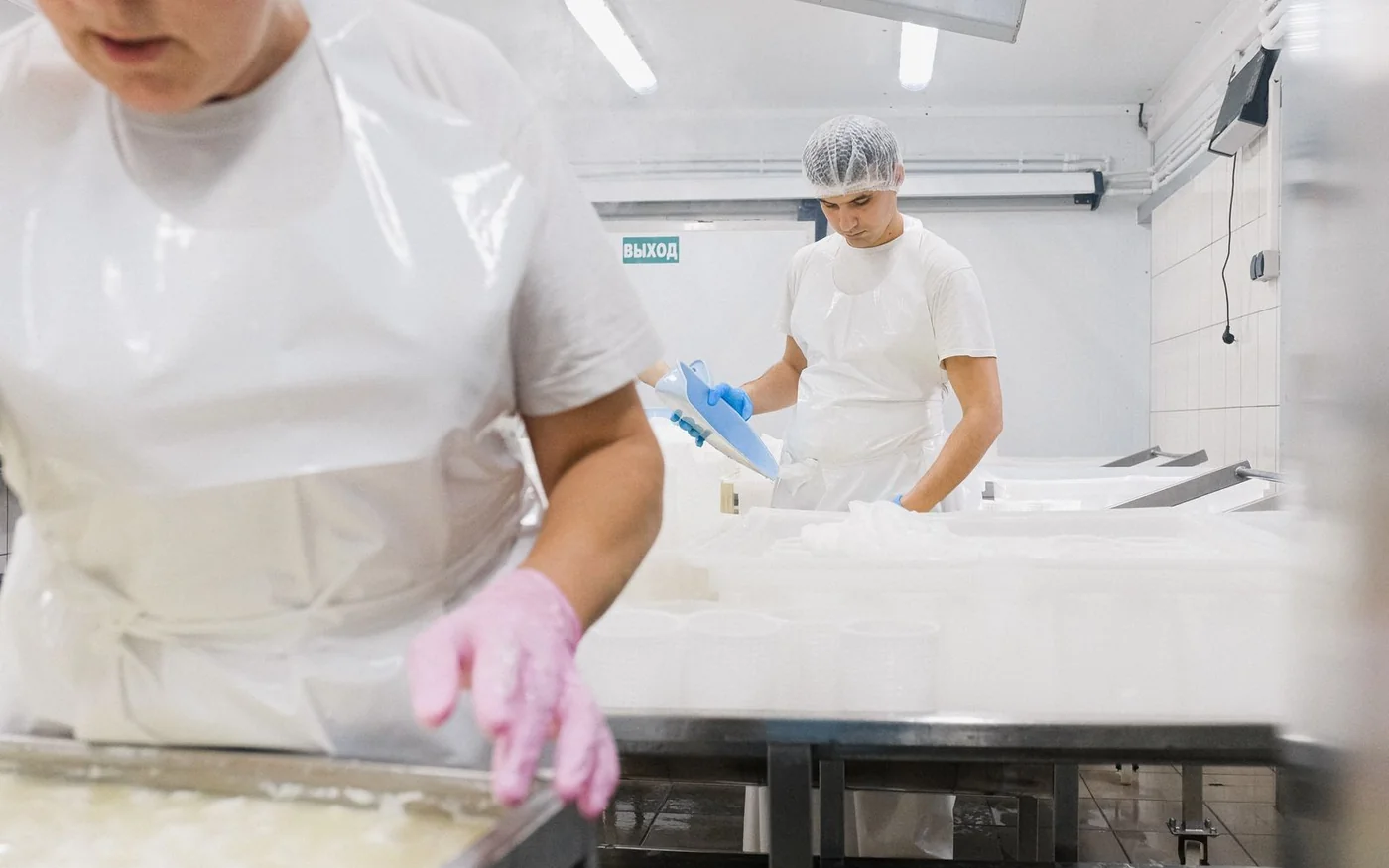
Bring the food technical team into development while the product can still be changed economically. Prepare a process flow from ingredient receipt through processing, packing, storage and dispatch. Identify the equipment, controls, records and personnel needed to make the product consistently at commercial scale.
FAO's control-of-operation guidance connects product and process descriptions with hazard control, monitoring and corrective action. Use a competent food safety team to develop the controls appropriate to the actual operation. A generic plan for a different food or site is not evidence that this process is controlled.
Run a representative production trial with agreed objectives and a record of the exact formulation, inputs, equipment settings, packaging and results. Assess what the trial establishes and what remains unproven before accepting a scale-up. A development sample and a repeatable commercial batch answer different questions.
Establish the change process. Decide how supplier substitutions, formulation revisions, equipment changes and packaging changes are assessed before use. Keep the approved specification and production instructions under version control so that purchasing, production, quality and label preparation work from the same information.
Establish the evidence behind shelf life and storage
Treat the intended shelf life and storage conditions as technical questions for the particular food, process and package. Arrange an appropriate assessment with qualified specialists and relevant laboratory support. Confirm applicable product standards and authority requirements before finalising the date marking or handling promise.
FAO's validation and verification guidance distinguishes demonstrating that a HACCP plan can control relevant hazards under production conditions from checking that the implemented system continues to work. It also identifies the need to review changes that can affect food safety. Neither a completed template nor a general certificate should be treated as the product's shelf-life evidence.
Define the assessment's scope with the technical team: the exact product and pack, intended conditions, relevant safety and quality criteria, sampling, methods and interpretation. Document the basis for the conclusion and its limits. Do not copy a competitor's expiry period or assume that a result from one pack or formulation transfers to another.
Then test whether the commercial route can meet the established conditions. Account for time in finished-goods storage, dispatch, transport, customer receipt and the customer's expected use or sale. A buyer's requested remaining life must be considered alongside the technical evidence and the actual delivery plan.
If the route requires a condition the product cannot support, revise the product, process, pack or channel with the appropriate technical assessment. Do not solve a commercial timing problem by simply changing the printed date.
Finalise packaging and labels before a large print run
Create a label review file tied to the current product specification. Confirm the applicable languages, product description, ingredients and allergen information, quantity, date and batch marking, storage or use instructions, responsible-party details and any nutrition or claim requirements with the relevant authority and technical advisers. Establish the requirements for the actual food rather than treating this list as an exhaustive legal checklist.
FAO's product-information guidance explains the role of allergen and handling information in safe use, and batch identification in stock rotation and recalls. Check that the finished artwork communicates the validated product and its instructions accurately.
Assess the packaging for the intended food, process, storage and transport conditions. Obtain the relevant specifications and suitability evidence from the packaging supplier, and define incoming checks with the technical team. A pack selected for appearance still needs to function in the production and distribution system.
Keep artwork approval, authority assessment where applicable, technical approval and purchase authorisation as identifiable records. Confirm which version is being printed and how obsolete packaging is controlled. If the formulation or claims change after printing, assess the consequence before using the remaining stock.
Design distribution around the product's actual needs
Choose warehouse and delivery arrangements that can support the established handling conditions and the intended order pattern. Confirm the permitted activities, capacity, controls, records and responsibilities of the parties involved. Ask how they handle receipt exceptions, damaged packs, rejected deliveries and stock placed on hold.
Agree the handover evidence between factory, warehouse, distributor and customer. Define identification, quantities, condition, applicable monitoring records and who can authorise acceptance or quarantine. Decide how a delivery exception is communicated before stock is released for sale.
Dubai Municipality's official food-inspection overview provides context for the oversight that continues along the food chain; launch approvals should be supported by ongoing operating records.
Build traceability into the order and stock systems before launch. Connect ingredient and packaging records, finished batch identification, quantities and customer dispatch records. Test whether the responsible team can identify affected stock and its distribution when presented with a simulated issue.
Article 9 of the federal food safety law includes operator obligations concerning records, personnel, notification, tracing distribution and storage, and withdrawal or recovery of affected food. Establish the actual procedure and current authority contacts with the responsible food safety team. A distribution agreement should make the parties' operational roles clear without being assumed to settle every statutory obligation.
Check the commercial model after allowing for saleable output
Prepare a launch cost model using the production arrangement and sales channel actually being proposed. Use supplier and service quotations where available and label estimates. Compare net sales receipts with the costs the business will incur to produce, release and deliver acceptable product.
| Commercial item | Question to resolve before committing |
|---|---|
| Ingredients and packaging | What quantities, minimum orders, payment terms and unused-stock exposure apply? |
| Conversion and quality work | What does the production quote include, and what testing, setup or release work is separate? |
| Saleable yield | What evidence supports expected output after losses, rejects and any authorised rework? |
| Storage and delivery | What handling, monitoring, delivery frequency and minimum service charges are required? |
| Customer terms | What net price, discounts, acceptance, returns and payment timing are agreed? |
| Launch funding | What cash is needed before customer receipts, including trials, approvals, stock and delays? |
Keep safety-related holds and nonconforming stock visible in the plan. Inventory that cannot be released is different from saleable stock. An assumed ability to rework, relabel or redirect it should not enter the model without an appropriate technical and authority assessment where required.
Stress slower customer uptake and a later approval or launch date. Consider packaging commitments, production minimums, storage duration and overlapping costs. Do not make the initial production run so large that the commercial plan depends on an unsupported sales forecast.
Release the launch in stages
Use a staged decision record to keep commercial interest, technical readiness and permissions aligned. The following is an editorial planning tool; it does not replace the authority's process or the technical team's acceptance criteria.
| Launch stage | Evidence to review | Commitment it should inform |
|---|---|---|
| Defined concept | Target buyer, product brief, channel and purchasing feedback | Development budget and production-route investigation |
| Technical development | Controlled specification, representative process work and open technical questions | Further trials, equipment or manufacturer selection |
| Approval and pack preparation | Applicable authority route, submissions, assessment outcomes and correct artwork | Production and packaging commitments with clear conditions |
| Distribution preparation | Suitable handling route, customer requirements, traceability and exception responsibilities | Launch quantity and delivery promises |
| Commercial release | Required permissions, product and batch release evidence, accepted orders and funded cash plan | Authorised dispatch and continuing performance review |
Name the person who can approve each commitment and the evidence that must be present. Keep a clear route for stopping release when an essential condition is unresolved. If production occurs at a contract facility, establish how the brand owner receives the records needed for its decisions.
After launch, review complaints, delivery exceptions, actual yield, stock age and customer demand. Assess proposed changes through the technical and approval processes they affect. A workable UAE food launch is supported by a consistent product, an appropriate approval file and a distribution system capable of preserving the conditions on which release depends.

Comments (0)
No comments yet. Be the first!