

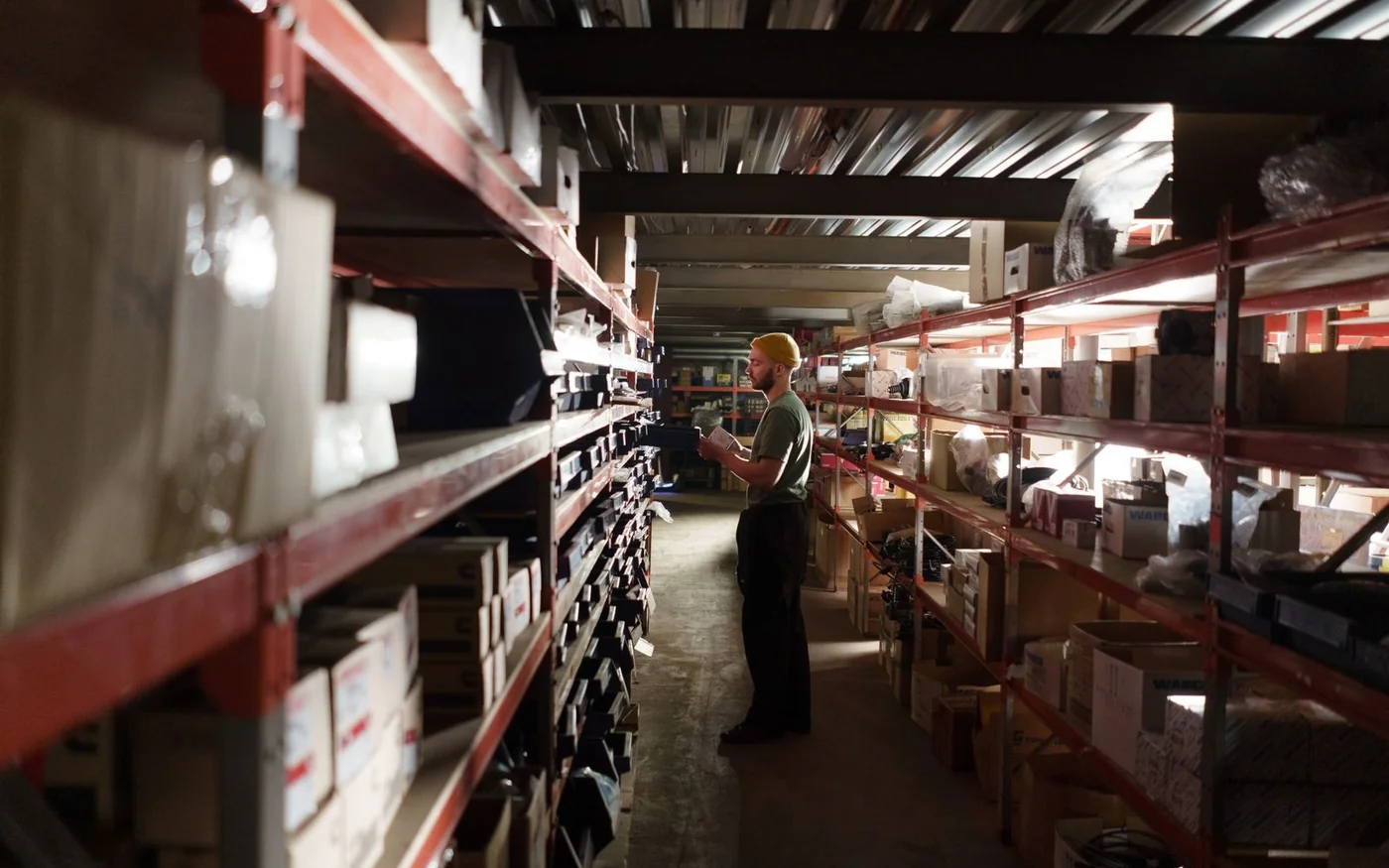
A mainland customer places an order, the goods are sitting in a UAE free-zone warehouse, and a truck is available. Before dispatch, the seller still needs to connect several decisions: who is entitled to carry out the sale, who will appear as importer, which customs procedure applies, how tax will be handled, and what evidence the warehouse needs to release the stock.
Treat the movement as a sequence of approvals and handovers rather than an ordinary local delivery. A commercial invoice does not answer every customs question. A cleared declaration does not establish every commercial permission. A delivery receipt confirms what the customer received, but it cannot replace the records needed to explain how the goods left free-zone stock.
The practical goal is a shipment file that follows the goods from the correct warehouse balance to the mainland receiver. Each party should know its responsibility before a vehicle is booked, with a clear route for handling a quantity change, an inspection or a rejected delivery.
Identify the actual movement
Start with the goods, their physical location and their customs history. Record the free zone, warehouse, stock owner, product description, quantity and the document under which the stock entered. Establish whether the proposed movement is a permanent local sale, a temporary movement, a return or a transfer with a different purpose. Similar-looking truck journeys can require different treatment.
Check the destination just as carefully. Identify the customer, the receiving address and whether that address is the final place of use or another storage point. A seller's office address is not necessarily where the goods are stored, and a customer's billing address may differ from the delivery site. Give the customs representative the actual locations rather than relying on a company name to describe the route.
Use one short movement brief as the common reference for the seller, importer, broker, warehouse and transporter. If they are discussing different quantities or locations, resolve that discrepancy before preparing a declaration. Reusing paperwork from the previous delivery can carry an unnoticed error into the next one.
Separate the right to trade from the right to clear goods
For Dubai, Executive Council Resolution No. 11 of 2025 establishes routes for free-zone establishments to conduct activities outside their zone within the emirate, subject to the appropriate DET licence or permit and applicable conditions. The options include a branch in Dubai, a branch operating out of the free zone, and a permit for specified activities. Eligibility depends on the activity and relevant approvals. The resolution also requires separate financial records for activities conducted outside the free zone. Dubai Resolution 11 of 2025.
That framework should prompt a specific permission check. Ask the licensing authority and, where relevant, DET how the actual selling activity may be conducted. Do not assume that every free-zone business must use a distributor, or that every business can begin mainland operations simply by paying customs charges. Check other emirates with their competent authorities rather than extending a Dubai arrangement across the UAE.
Keep the answer in the shipment's operating instructions. Identify the legal seller, the party issuing the sales invoice and any branch, permit or intermediary used in the transaction. A warehouse or transport provider can perform a physical service without automatically becoming the party authorised to sell the goods.
Name the importer and authorise the customs representative
Dubai Customs states that a licence holder needs a Customs Business Code and an appropriate declaration to clear goods for local sale. It specifically calls for the appropriate declaration when a free-zone company sells goods to the mainland, with restricted-goods approvals where required. It also describes clearance by authorised agents with the relevant licence and customs code. Dubai Customs clearance FAQ.
Before dispatch, write down which entity will be the importer for the movement and which party will submit the declaration. Ask the representative to confirm that the proposed registration, authorisation and procedure fit the goods and transaction. The fact that an agent can submit paperwork does not answer whose name should appear as importer or who funds the assessed amounts.
Agree who approves the declaration data. The seller should check product and quantity information, while the importer should understand the values, supporting evidence and tax treatment being submitted under its name. Keep a named contact for queries. A generic message that the broker is handling everything leaves the team without an owner when customs asks for an explanation.
The useful handover is an approved shipment dataset and document pack, followed by identifiable clearance evidence. Asking only whether somebody has started the paperwork makes it difficult to tell whether the goods can actually move.
Build a document pack around the actual shipment
Dubai Customs' Service Guide version 9 lists invoices, packing lists, certificates of origin and permits from restriction authorities among the documents for its declaration service. Sharjah Customs separately lists a free-zone customs entry bill, importer invoice, selling invoice and packing list for goods moving from a free zone to local markets. These are authority-specific starting points, so confirm the required documents for the actual movement. Dubai Customs Service Guide, Sharjah Customs free-zone procedures.
Build the pack from the shipment rather than treating a general checklist as sufficient. Match the description, unit of measure, quantities, values and parties across the purchase order, invoice, packing list, stock record and declaration instructions. If one document uses cartons and another units, show the conversion explicitly. Confirm how the supporting entry record connects to the quantity now leaving.
| Handover | Evidence to agree for the movement |
|---|---|
| Seller to importer and representative | Commercial parties, product details, quantities, values and transaction instructions |
| Stock owner to warehouse | Identifiable stock, authority to release it and an approved dispatch quantity |
| Importer to customs representative | Registration, authorisation, valuation support and any required product approvals |
| Customs representative to dispatch team | Declaration reference, status and any conditions still preventing movement |
| Warehouse to transporter | Released quantity, loading details and applicable operator exit documents |
| Transporter to receiver | Delivery reference, destination, receiving contact and any handling requirements |
| Receiver back to seller | Accepted quantity, shortages, damage or rejection and the signed receipt record |
This is a proposed control structure, not a declaration that every operator uses identical documents. Ask the free-zone warehouse or operator which release and exit evidence it needs, who obtains it, and whether there are collection appointments or access conditions. Confirm those requirements before assuming a cleared customs transaction means a truck can immediately enter and load.
For regulated goods, resolve the required product or consignment approval with the relevant authority. Keep the approval linked to the product and shipment it covers. An approval for a different product, quantity or importer may not answer the question raised about this delivery.
Check designated-zone treatment without assuming it
For VAT, a free-zone licence and designated-zone treatment are different matters. Article 51 of the current Executive Regulation makes the latter conditional on Cabinet designation and specified controls and operating procedures. For goods moved from a designated zone to a place inside the UAE, its provisions address official evidence that VAT has been applied on the import. It also treats certain owner consumption and shortages in untaxed goods as imports. FTA Executive Regulation, Article 51.
Ask the finance team to establish the status of the actual location and goods, then confirm the treatment of the transaction and import together. Avoid starting with the assumption that the free-zone seller's invoice is automatically outside VAT. Equally, do not assume that every free-zone movement produces an identical tax result. The supplier needs the evidence appropriate to its treatment, not simply an assurance that the buyer will sort it out.
Keep a separate tax evidence reference in the shipment file. Identify who obtains it and who checks that it relates to the correct goods. Where the buyer or its representative handles the import, agree how the seller will receive the necessary supporting record after clearance. A commercial agreement to cooperate is useful only if the information actually reaches the party that needs it.
Confirm funding before arranging dispatch
Ask for an itemised estimate of assessed customs amounts, applicable tax, clearance services, warehouse handling, transport and other identified charges. Establish which amounts are included in the sale price and which remain payable by the buyer. Specify who can approve a variation and how it will be paid.
Keep tax recovery separate from the question of who must fund a payment now. The finance team should confirm the applicable import accounting and payment process for the named importer. Do not book collection on the assumption that a future recovery or customer payment is already available to settle an immediate bill.
Set a spending boundary for exceptions. If an examination, extra handling or a failed collection creates a new cost, the representative and transporter should know whom to contact before incurring further avoidable expense. A quotation's service completion time should not be treated as a guarantee of warehouse release or customer acceptance. Plan around confirmed operational milestones.
Sequence clearance and physical release
Agree the sequence before the vehicle arrives. The team needs to know when documents are ready, when the representative can submit, how further questions will be handled, and what evidence authorises the warehouse to load. Confirm the receiving appointment with the customer and leave room for outstanding approvals rather than promising delivery from an assumed clearance time.
Use status descriptions that reveal the remaining work. Documents received, declaration submitted, query outstanding, cleared, warehouse release confirmed and delivered describe different conditions. Include the reference and owner behind each update. A message saying done may otherwise mean only that one participant has finished its own task.
Before loading, compare the goods physically selected with the approved dispatch record. Check the count and the product identifiers appropriate to the stock. If a pallet is substituted or the order quantity changes, send the change back through the responsible parties before the truck departs. The dispatch team should not decide alone that a paperwork difference is too small to matter.
Work through a partial shipment
Consider an invented example involving 100 cartons held in a UAE free-zone warehouse. A mainland customer orders 30 cartons, and the parties agree the commercial, customs and tax arrangements for that movement. The dispatch file should identify those 30 cartons and connect them to the stock and supporting entry record. It should leave an explainable balance of 70 cartons in the warehouse.
Suppose the customer then asks for 36 cartons after the documents have been prepared. The difference is six cartons, not an administrative footnote. Stop the original dispatch instruction, confirm the revised commercial quantity, and have the representative establish what must change before release. Do not load six extra cartons on the assumption that the next declaration will tidy the position.
Now suppose the warehouse loads 30 cartons but the customer accepts only 28 because two are damaged. Record three distinct facts: 30 dispatched, 28 accepted and two rejected or held pending instructions. The remaining free-zone balance is still 70 if all 30 left; it does not become 72 just because the customer refused two. Track the physical location of the rejected cartons and agree their permitted next movement before treating them as returned stock.
The quantities in this example illustrate reconciliation only. They do not establish that a particular authority permits a consolidated declaration, a later adjustment or an automatic return. Have the representative confirm the required procedure for the actual change.
Handle corrections and returns through the proper process
A wrong invoice reference, changed value or quantity discrepancy can require more than editing the company's internal file. Dubai Customs' Service Guide describes a declaration amendment service requiring approval, as well as limitations on cancellation, including after cargo release. Establish the correct route for the situation rather than assuming an issued declaration can simply be deleted and replaced. Dubai Customs amendment and cancellation services.
For a return, establish who owns the goods, where they are now and why they are moving back. Keep the original sale, declaration and receipt references together with the return instructions. A customer credit note and the physical return answer different questions. Both may matter, but neither should be used to imply that the customs position has automatically reversed.
Escalate missing stock promptly. Compare warehouse records, dispatch evidence and the customer's receipt before deciding whether the problem is a counting error, a delivery discrepancy or a genuine loss. Keep any unresolved quantity visible rather than forcing the records to balance with an unexplained adjustment.
Close the movement with a reconciled stock balance
After delivery, assemble the final declaration evidence, release record, transporter document, customer receipt, invoices and any tax evidence required by the transaction. Reconcile the physical quantity dispatched with the quantity declared and the quantity accepted. Explain differences and assign responsibility for each outstanding action.
Update the free-zone stock balance by product and the identifiers used to trace it. Keep goods sold, goods still held, damaged stock and goods awaiting a return decision distinguishable. An order is not fully explained merely because the customer has paid; the stock and movement records must still tell the same story.
Use the completed file to improve the next dispatch. Correct an unclear importer instruction, obtain a missing approval earlier or agree a better receiving handover. A workable free-zone-to-mainland process gives the business a repeatable answer to five questions: who may sell, who imports, what clears the goods, who releases them, and what the customer actually receives.


Comments (0)
No comments yet. Be the first!