

A return does not finish when a courier delivers a parcel to the warehouse. The retailer still has to identify the item, resolve the customer's claim, inspect its condition, decide what can happen to the stock and reconcile refunds, charges and any recoveries. Costs accumulate when these steps sit in separate queues with nobody responsible for the complete case.
Design the process around one identifiable return record from the original order to the final customer and stock decisions. Track transport, handling, support, packaging, unrecovered fees and loss of inventory value separately. Then compare providers on the work they actually perform rather than on the collection price alone.
For a UAE retailer, customer rights, the retailer's published policy and a marketplace's operating rules must also be distinguished. The courier moves the item; that does not make the courier the authority deciding every remedy or whether the goods can be sold again.
Establish the basis of the return
Begin by identifying the reason: a product problem, incorrect fulfilment, transit damage, a failed delivery or a request under the retailer's voluntary policy. Record what the customer reports without treating an initial reason code as the final finding. A wrong-size request and a damaged item may follow some common transport steps but require different evidence and decisions.
The UAE consumer-protection Executive Regulation addresses remedies where a failure arises from preservation, storage, handling, installation or other causes for which the supplier is responsible. Article 27 provides a choice of refund, replacement or repair without charge in those circumstances. Article 34 also restricts conditions that remove statutory obligations and addresses blanket no-return wording, subject to specified exceptions. Build the policy around the applicable rights rather than assuming a printed restriction settles every case. Consumer Protection Executive Regulation.
Have the responsible team confirm the remedy and conditions for the actual product and circumstances. Do not turn a voluntary change-of-mind window into a universal statement of UAE law, or use an internal processing rule to remove a mandatory right. Dubai DET maintains an official consumer complaint channel covering defective or unsafe products, warranty matters and unfair practices, among other issues. Dubai Consumer Rights.
Write customer communications so that they explain the next action, who will contact the customer and what information is needed. Give customer support a way to escalate a case that does not fit the standard policy rather than forcing it into the nearest available category.
Keep the customer decision and stock decision distinct
A refund or replacement resolves a customer-facing issue. It does not automatically establish that returned goods are saleable, that a supplier must reimburse the retailer or that a courier claim will succeed. Give each decision a named owner and a recorded outcome.
Use separate statuses for the customer resolution and physical item. For example, the customer case may be resolved while the item remains awaiting inspection. Conversely, the warehouse may have completed inspection while finance is still reconciling the payment. One undifferentiated status called complete can hide either problem.
For a replacement, link the new dispatch to the original order and return record. Confirm whether collection and replacement delivery are separate services or a specifically agreed exchange process. Track the new item and the returned item independently so that the replacement does not create a second unexplained stock movement.
Capture enough information before collection
Create a return reference linked to the original order, item, quantity and customer resolution request. Add the collection or drop-off instructions and any product identifiers needed to distinguish the item, such as a serial, batch or model reference. Keep the reason, photographs or other relevant evidence attached to the same case.
Request only information needed to handle and assess the return. Explain packaging and accessory requirements appropriate to the item without suggesting that every missing box automatically cancels a consumer remedy. Give the courier a usable contact and collection address, and establish how a change of address or appointment is handled.
Distinguish a created label from a collected item. Record the collection event and tracking reference, then reconcile the parcel that arrives. If the customer returns several items together, the warehouse needs to know which units the parcel is expected to contain. A tracking number proves a parcel movement; it does not by itself identify every product inside.
Specify where the provider's service ends
Aramex Rapid Returns describes a branded request portal, policy validation, labels, tracking and return methods enabled by the merchant. Its inspection and restocking FAQ explains that the standalone service transports items back to the warehouse, while inspection, grading and restocking can be arranged through additional logistics solutions. Confirm the scope proposed for the actual UAE operation. Aramex Rapid Returns.
Transport back to a warehouse and making an item available for sale are separate services. Ask who opens and identifies the parcel, checks condition, records discrepancies and updates the stock system. If the retailer performs those tasks, include its labour, space and systems in the cost comparison.
For every proposed return method, check coverage, product acceptance, packaging, collection attempts, consolidation and delivery arrangements. A drop-off option may suit one customer group while collection remains necessary for another. Assess the complete process rather than assuming that one method is cheapest or most convenient for every order.
Make receiving a controlled handover
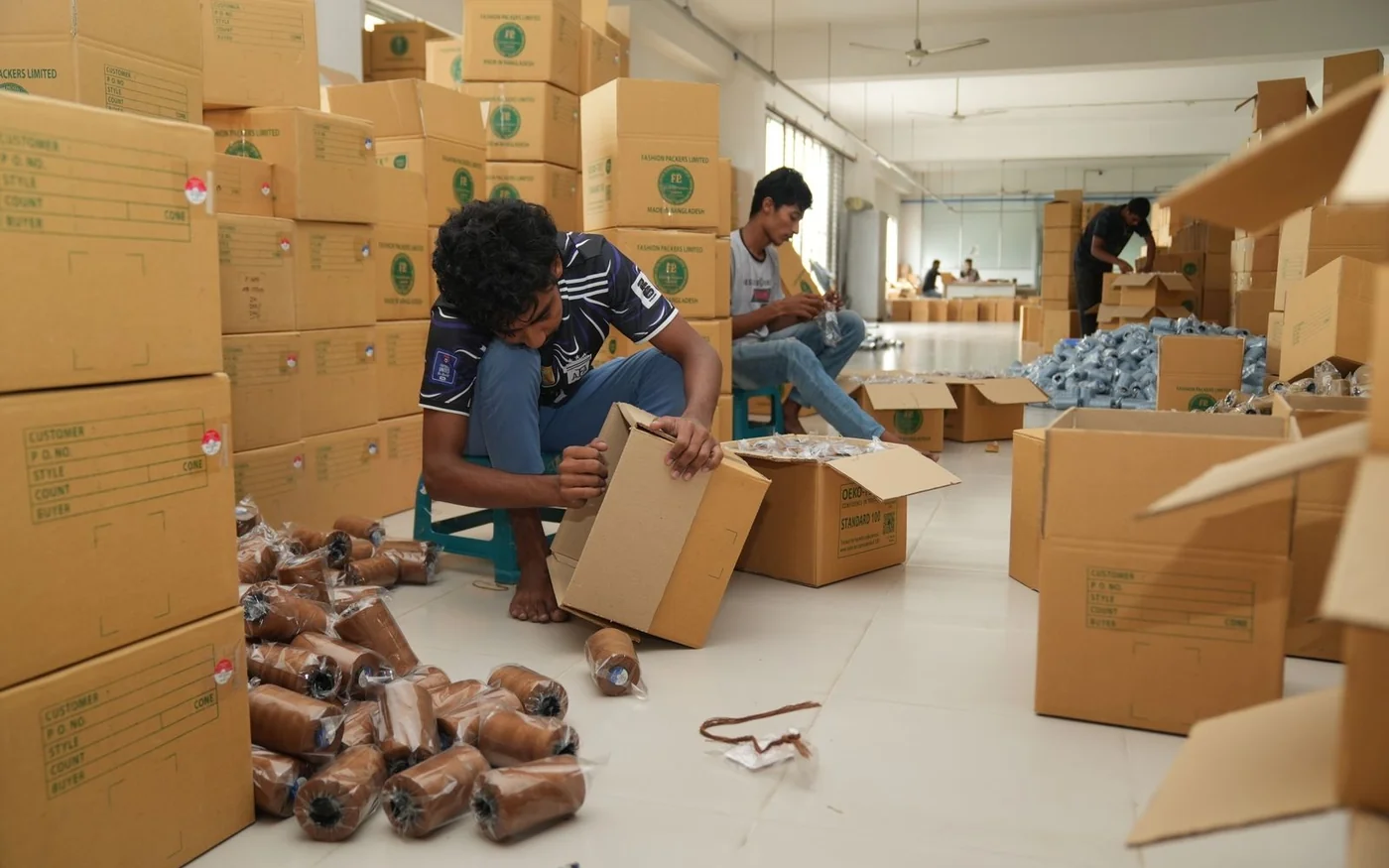
Set a receiving area and owner for returned goods. Match the parcel to its return reference, record the items actually received and identify visible discrepancies promptly. Keep goods awaiting assessment distinguishable from stock already approved for sale.
| Stage | Cost or unresolved work to record |
|---|---|
| Request and support | Staff time, missing information, repeated contacts and exception review |
| Collection or drop-off | Transport charge, failed attempt, packaging and consolidation |
| Receiving | Parcel matching, count, discrepancy evidence and temporary holding |
| Inspection and grading | Labour, testing, specialist assessment and missing accessories |
| Customer resolution | Refund or replacement status, payment reconciliation and communication |
| Stock recovery | Repacking, permitted resale, repair, supplier return or disposal |
| Financial close | Fees, inventory value adjustment, claims and confirmed recoveries |
Agree the condition categories and who may assign them. A cosmetic packaging issue, a functional fault and an item with an uncertain history should not automatically produce the same disposition. Refer regulated, safety-sensitive or specialist products to the qualified team and applicable product procedure.
Keep the evidence proportionate and connected to the item. Record what was found and when, rather than relying on a later recollection that a parcel looked damaged. Do not let an internal receiving backlog erase a deadline for notifying a provider or marketplace.
Apply the marketplace process for the actual fulfilment model
Noon's Fulfilled by Partner returns guidance describes request information, collection, receipt assessment and seller disputes as separate stages. A seller should therefore check the process for its fulfilment model and category rather than applying a rule remembered from a different programme. noon FBP returns process.
Noon's Partner Disputes policy also distinguishes customer-initiated returns, non-deliverable returns, inventory removals and grading disputes. Its requirements and time windows differ by case, including receipt-condition requirements for certain damaged non-deliverable shipments. Keep the applicable policy and evidence requirements with the case, and verify them when the return occurs. noon Partner Disputes policy.
A provider claim is a separate recovery process. Assign someone to submit it, answer questions and reconcile the outcome. Do not treat a potential reimbursement as approved income or assume that a claim for the item's full retail price will be accepted.
Reconcile the customer refund and marketplace settlement separately. Record any fee credits, deductions or adjustments against the relevant order. A refund showing as issued in one system does not establish that every related financial entry has reached the retailer's account.
Calculate process cost and inventory loss separately
Consider an invented return for an item originally held at an inventory cost of AED100. Assume collection costs AED18, receiving AED6, support AED4, repacking AED7 and unrecovered transaction fees AED5. The listed processing burden is AED40. These are illustrative inputs, not UAE courier prices or standard warehouse charges.
Now assume the returned item has a supportable recoverable inventory value of AED80 after assessment, with the listed repacking expense treated separately. The reduction from its original AED100 cost basis is AED20. On this management comparison, the return creates AED60 of combined processing cost and inventory loss: AED40 plus AED20.
Do not use the original retail selling price as the inventory cost basis. Also keep the customer's refund separate from this incremental cost calculation: the refund reverses the sale proceeds and should not then be added again as though it were another warehouse expense. Have finance align the entries with the business's accounting and tax treatment.
If AED15 of original outbound delivery cost has already been incurred and is not recovered, the unsuccessful transaction has AED75 of the listed cost and value-loss exposure. The returned stock's assumed AED80 value is an inventory recovery, not cash received. No further resale margin is included in this example.
If the supportable recoverable value is only AED60, the inventory reduction becomes AED40. The combined return burden rises to AED80, or AED95 including the original outbound delivery. The physical collection charge is unchanged, but the economics differ because less value can be recovered from the item.
All values are hypothetical, and tax and unlisted costs are excluded. Repacking and recovery assumptions must be consistent: do not deduct the same expected expense twice when estimating recoverable value. The example is a management view for comparing causes and options, not a prescribed inventory valuation method.
Measure the time spent waiting for decisions
Track how long returns wait between request, collection, warehouse receipt, inspection, customer resolution and final stock disposition. Distinguish transport time from internal queue time. A faster courier cannot fix a warehouse that receives returned parcels but leaves them unidentified.
Give priority rules to the people handling the queue. Consider a product's shelf life, seasonal selling period, claim deadline and required specialist assessment. Priority should reflect the actual case rather than a blanket assumption that high selling price always means the greatest recoverable value.
Review recurring delays with the owner of the relevant step. Missing order links call for better intake data; repeated failed collections may require clearer customer instructions or appointment management; unprocessed stock needs a receiving or assessment decision. A single average return cycle can conceal these different causes.
Choose recovery routes without hiding the item's condition
After assessment, record the authorised outcome: return to appropriate saleable stock, sell through a permitted accurately described channel, repair, return to a supplier or dispose through the applicable process. Keep the item out of available inventory until the required decision and work are complete.
Retain the basis for a downgrade or write-off and connect it to the return reason. A business cannot learn whether losses come from fulfilment, handling, product quality or policy design if every case is recorded simply as returned. Review the findings without assuming that every unexplained discrepancy is customer misconduct.
For supplier returns and warranty recovery, confirm acceptance, documents and who pays the next movement. Creating a supplier claim does not mean the goods have physically left the retailer or that reimbursement has been agreed. Track the stock and money until both positions are explained.
Compare complete operating proposals
Ask potential partners to price the same item mix, geography, expected volumes, return methods and work scope. Separate collection, failed attempts, transport to the nominated warehouse, receiving, inspection, testing, repacking, storage and onward movements. Identify minimum commitments and exceptional charges.
Request sample reports showing how a return connects to its order and final outcome. Ask how the partner handles an unidentified parcel, an empty box, a different item, damaged packaging and a missing accessory. Establish how evidence reaches the retailer and who must act on it.
Test a representative return before committing larger volumes. Confirm that the customer receives usable instructions, the item can be tracked and matched, the assessment is recorded, and finance can reconcile the result. A polished request portal is useful only when the remaining work has owners and adequate capacity.
Close the case and improve the original sale
A return is operationally closed when the customer resolution is recorded, the item's location and disposition are known, and the charges and recoveries are reconciled or explicitly assigned for follow-up. Keep open claims visible instead of allowing them to disappear inside a completed transport status.
Review return costs by reason and product group using the retailer's own evidence. Compare cohorts on a consistent basis, such as orders delivered and returns from those orders, rather than mixing current requests with an unrelated sales period. Do not invent a target return rate from another retailer's experience.
Use the findings to improve the part of the business causing the problem: product descriptions, picking accuracy, packaging, delivery arrangements, product quality or customer instructions. The workable reverse-logistics process does more than bring parcels back. It resolves the customer issue, protects the stock decision and makes the financial result understandable.



Comments (0)
No comments yet. Be the first!