

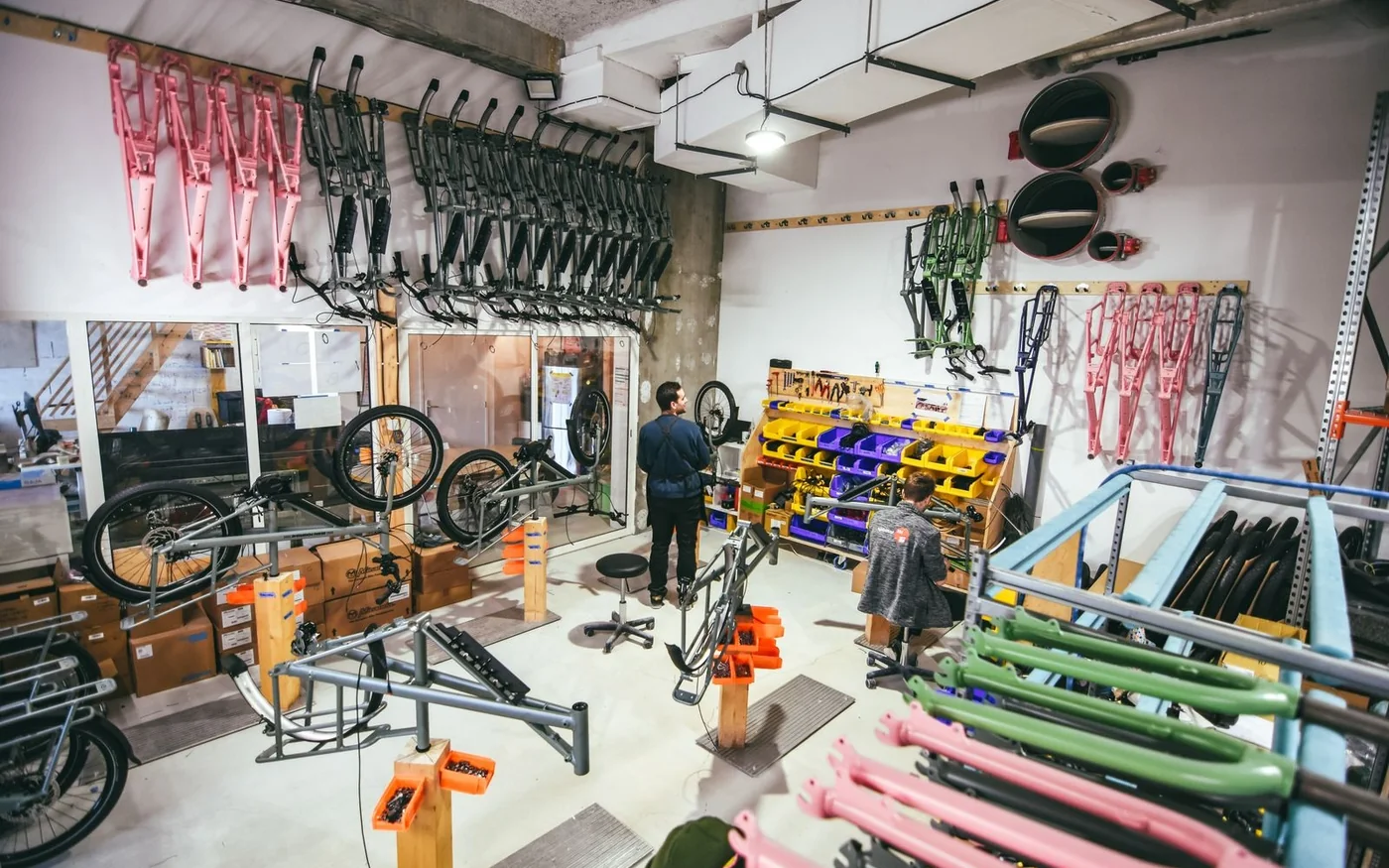
On Hudayriyat Island, Wolfi’s lists a service for a rider who already owns a bicycle and would rather leave it near the track. The company offers bike storage through its rental facility at the Abu Dhabi Cycling Club. It describes a mechanic checking the bike in and out, with upkeep included in the service. The offer addresses a problem that can recur even after a customer has bought everything they need to ride. They still have to get the bike to the track and have it ready when they arrive. Wolfi’s Hudayriyat bike storage offer
Founder Wolfgang Hohmann opened his first UAE shop on Sheikh Zayed Road in Dubai in 2002. Looking back in 2022, he recalled a small early riding group and a city with far less cycling infrastructure than he would see later. The Abu Dhabi Investment Office now profiles Wolfi’s Hudayriyat flagship as part of that longer business journey. In Abu Dhabi, the company’s published services include rental, fitting and storage. Those services give a founder a way to look beyond the sale of a specialist product and ask which problems keep coming up where people use it. Hohmann’s interview with The National Abu Dhabi Investment Office’s Wolfi’s profile
Start with the trip the rider is trying to make
A person who wants to ride on Hudayriyat may already know what sort of bike they want. Their immediate problem could still be practical. They need a bike for the morning, need a mechanic to look at something before heading out or need a way to avoid loading their own bike into a vehicle every time they ride. A shop positioned near the route can handle some of those problems while the rider is still deciding what to do. Its usefulness depends on whether the right staff, equipment and space are available at that point.
Wolfi’s lists rentals on Hudayriyat. The island operator also names Wolfi’s as a rental option in its information for the 2026 women’s cycling series. The two listings show how the service can appear in front of a customer making plans to use the track. A prospective rider can find out that they may be able to take part even if they do not own a bike. That is a different buying moment from browsing frames in a showroom. Wolfi’s rental locations Hudayriyat Island’s 2026 series information
Hudayriyat Island’s April 2024 Instagram reel shows a group of riders on the track during a separate cycling event.
For another Abu Dhabi operator trying to find a distinct customer need, start with the last time someone tried to do the activity. Ask when they decided to go, what they needed to bring and what made them postpone or change plans. If they already solved the problem themselves, find out what the workaround required. Someone may have borrowed equipment, paid for transport or chosen a different time to go with a friend. A recurring workaround can show which part of the trip is worth making easier and how much effort the customer already spends on it.
Put each service against a different customer decision
Renting, fitting and storing a bike all help someone get on the track, but they answer different questions. A renter needs access for a specific period and enough information to select a suitable bike. A customer who wants a fitting needs someone to assess how they sit and move and explain what adjustments make sense. A regular rider considering storage needs to know how easily they can retrieve their own bike and how it will be looked after. The operating requirements range from a fleet in usable sizes to specialist fitting staff and a reliable check-in process.
Wolfi’s describes an optical motion-capture system at its Hudayriyat fitting lab and says its service can produce a personalised report. The storage page, by contrast, emphasises handover and regular maintenance. Both offerings use specialist knowledge. They apply it to different points in the customer’s routine. A fitting can help someone make or refine a decision about a bike. Storage and upkeep can make it easier to keep using the one they own. Wolfi’s bike fitting service Wolfi’s bike storage service
A founder could map this difference through the conversations staff already have. If most questions are about which bike is available in time for a ride, adding a fitting service may leave the immediate obstacle untouched. If riders own bikes and keep asking where they can leave them between visits, a service that shortens the journey could be more relevant. Capture each request in the customer’s words, including when they needed it. Keep track of cases the team resolved and cases where a customer walked away. A repeated unresolved request may be more informative than the most elaborate idea the team has discussed.
Learn what the location contributes
The Abu Dhabi setting gives the retailer access to people who are already thinking about riding. Hohmann’s account of the early Dubai shop describes how much the environment had changed since he first arrived in 2002. ADIO’s profile presents the Hudayriyat flagship in the context of infrastructure, partnerships and community. Neither account supplies a breakdown of how much business the location generates. A founder comparing possible sites can still use the example to ask whether a location makes the service available at the moment people need it or merely makes the shop easier to see. Hohmann on the early UAE cycling market ADIO on the Hudayriyat flagship
Imagine testing rentals at a UAE sports venue over several weekends. Record when requests arrive, what proportion you can fulfil and why others are missed. Look separately at event days and ordinary days. An event can produce a queue of first-time riders who all need a bike at the same hour. Ordinary days can show whether a smaller number of people use the service regularly when there is no event to organise their visit. Those patterns have different implications for the fleet and the staff rota.
A location can also change how customers hear about the service. An event organiser might mention it before someone registers. A rider may see the shop after arriving and remember it for a later trip. Ask how customers found the offer and when they decided to use it. If many arrive unprepared and need help immediately, the operator will have to think about the time it takes to serve them. If most bookings are made in advance, staffing and preparation may be easier to organise even when peak demand is similar.
Check whether the service still works at the busy time
In a rental business, a full booking sheet can conceal a capacity problem. Bikes have to be available in the sizes people need and ready in time for collection. Returned equipment needs checking before it goes out again. A workshop that supports rentals and also serves regular customers has to decide what happens when several jobs arrive at once. The founder can test the service by following a booking through a busy period and finding out where the customer waits and what work piles up behind the counter.
Consider a hypothetical operator with 12 rental bikes. It can complete 10 rentals at AED 90 each in a morning, giving AED 900 in receipts. If the team spends AED 250 on incremental staffing and AED 150 on cleaning, booking costs and a provision for routine wear, AED 500 remains before fleet ownership costs, venue charges and overhead. These figures are illustrative. Two bikes sitting unused could mean there was limited demand, or that the remaining sizes were unsuitable for customers who asked. The booking and enquiry records can help tell those cases apart. The right response might be a change in the fleet mix even if the total number of bikes stays the same.
Storage raises a different capacity question. Each customer occupies a space between visits. To understand the work involved, record how often bikes are collected, when people need them and how long the handover takes. If the busiest hour overlaps with rental collection, check whether the team can reliably do both. Include time for the tasks promised with storage. An operator can sell every space and still find that it has promised more pre-ride work than one shift can perform.
Decide what to expand once the need is clear
Before adding a service, describe who will buy it, when they will need it and what the team must do to deliver. For example, a cyclist who visits once during a trip may rent for access. A resident who rides most weekends may pay to avoid repeated transport. An enthusiast considering a different bike may pay for a fitting because the decision is difficult to reverse. Ask which requests the team can satisfy consistently today and what extra resource it would need to satisfy the next set.
Test the smallest version that still honours the customer promise. A founder who sees an opportunity for storage might first offer a limited number of spaces and defined collection windows. Track enquiries that the test cannot serve, including people whose schedules do not fit. Compare renewals and missed collections with what the team expected when it set up the offer. If riders use the storage regularly but struggle to collect bikes during a particular window, the next investment could be staffing at that time. More space may do little until the handover works.
The same reasoning helps when choosing between more locations and more capacity at one site. Document what customers use because the service is close to the track and what they would seek out elsewhere. A fitting appointment may justify a special trip. Collecting a rental for a morning ride may depend much more on convenience. By working through a customer’s actual trip, a founder can see which part of the offer travels and which part depends on the place.
Before treating one service as a route to selling another, check what customers actually do. A renter might come back for a second ride, bring a friend or decide to buy a bike elsewhere. A fitting customer might value the service even if they keep their current bike. Give each offer a way to pay for the time it uses, then look at whether some customers choose to use more than one. That lets you distinguish a useful standalone service from one that depends on a later sale the business has yet to observe.
Wolfi’s Hudayriyat services put several answers to that question within reach of the same riders. For a founder in Abu Dhabi, choose one part of the trip people regularly struggle to complete. Make a specific offer that helps them through it, then watch whether they use it again and whether the team can deliver it during the hours that matter.



Comments (0)
No comments yet. Be the first!